


What Is cUSD?
cUSD (Celo Dollar) is a stablecoin pegged 1:1 to the US dollar and issued on the Celo network through the Mento protocol. Launched in 2020 as the first Mento stablecoin, cUSD is backed by an overcollateralized on-chain reserve holding CELO, BTC, ETH, and other assets - the reserve always holds more value than the cUSD in circulation, and anyone can verify it on-chain. Users mint cUSD by sending reserve assets to the Mento contracts and redeem it the same way, which keeps the price anchored to $1.
cUSD lives on Celo - an Ethereum Layer 2 optimized for stablecoin payments, with block times around one second and average fees of about $0.0005. As of mid-2026, the network processes over $6.2 billion in monthly stablecoin volume, with cUSD, its siblings cEUR (euro) and cREAL (Brazilian real), and natively issued USDT and USDC all running on the same rails. For the full picture, see A Beginner’s Guide to Celo Blockchain.
What Is a cUSD Wallet?
A cUSD wallet is an app that stores the private keys to your address on the Celo network and lets you hold, send, and receive Celo Dollars. Since Celo is EVM-compatible, a cUSD address is a standard 42-character 0x address, and the same address also holds your CELO and any other tokens issued on the chain.
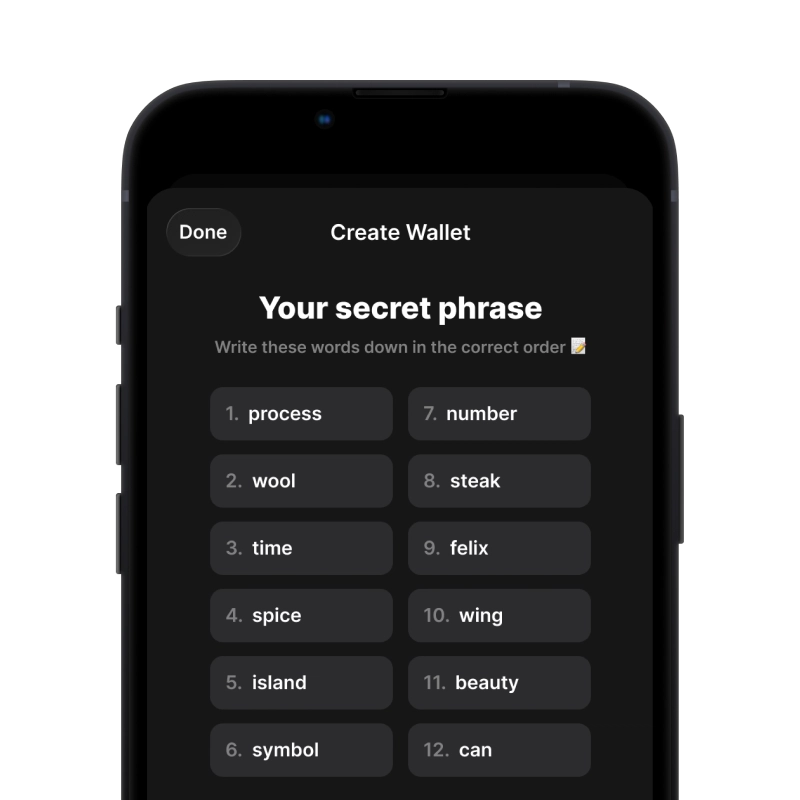
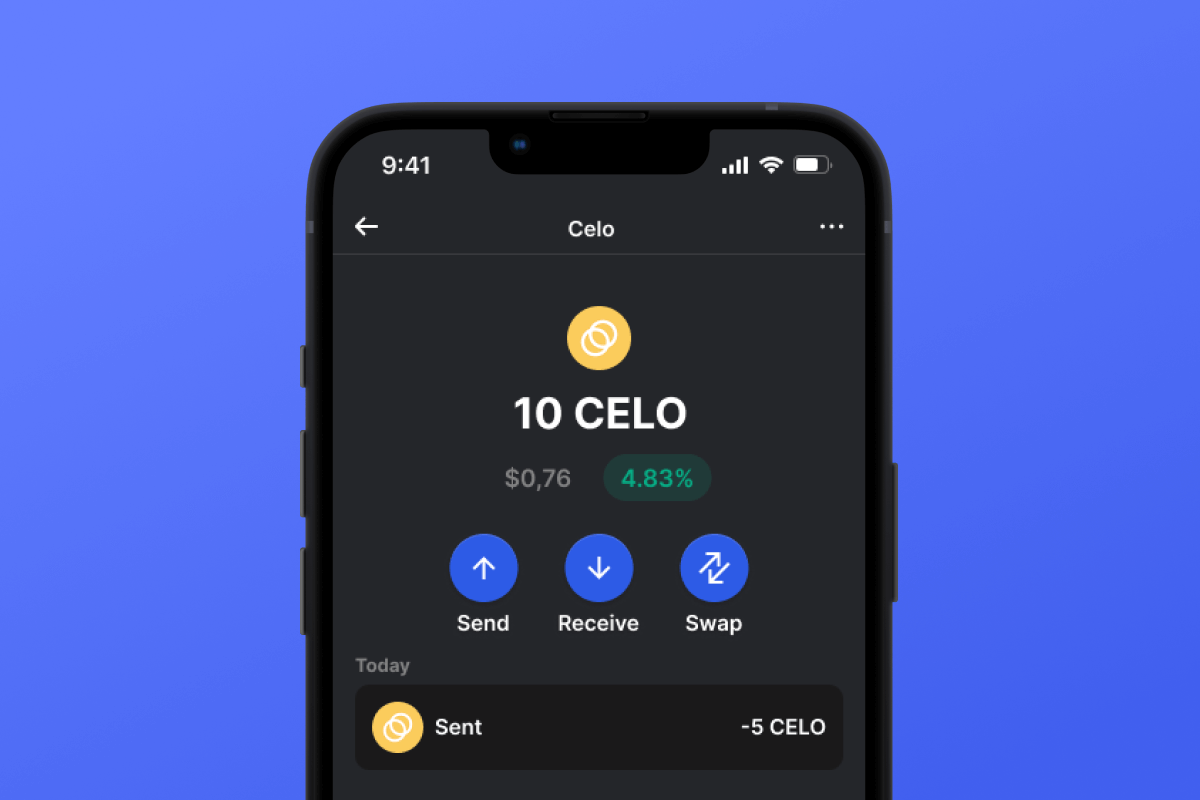
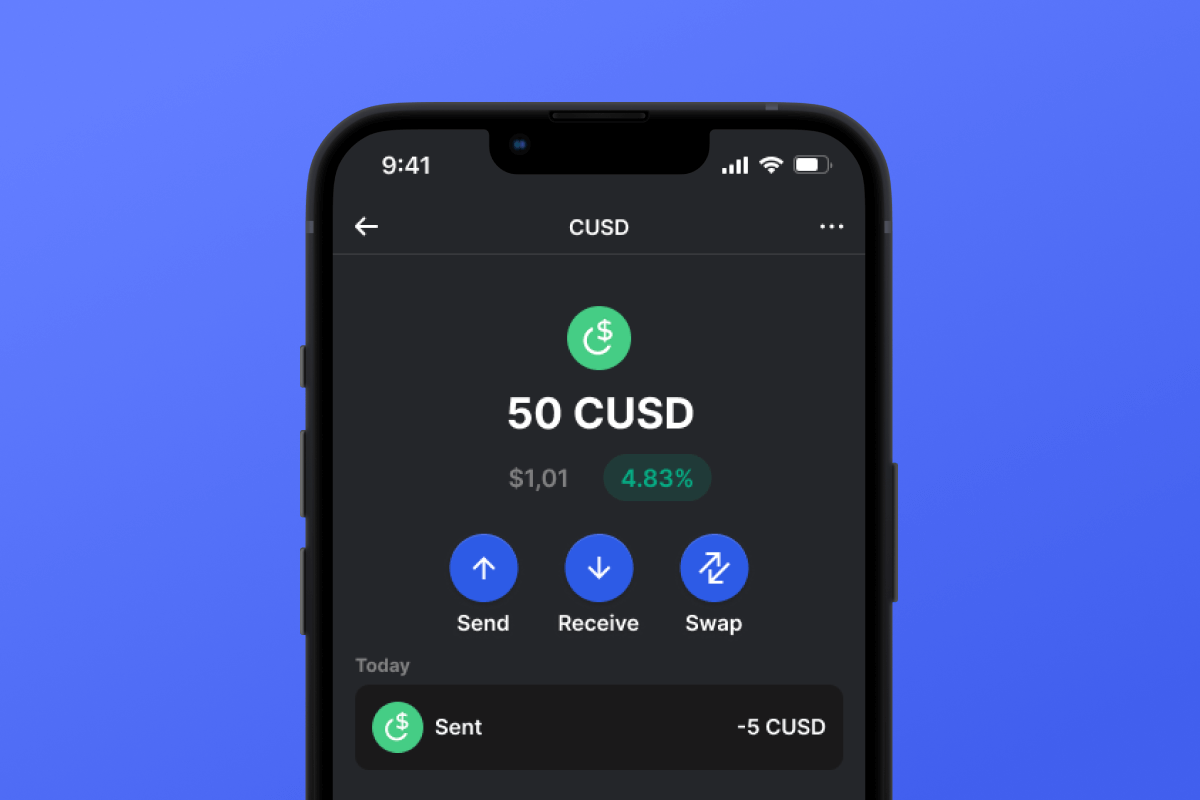
Gem Wallet is a self-custodial cUSD wallet: your keys are generated and stored on your device, protected by a single 12-word recovery phrase, and nothing about your balances or transfers passes through anyone’s servers - no accounts, no tracking. Gem Wallet supports cUSD alongside all Mento stablecoins and ERC20 tokens on Celo since April 12, 2026.
Pay Gas in cUSD: Fee Abstraction
Celo’s fee abstraction lets transaction fees be paid directly in cUSD, USDT, or USDC instead of the native token. That makes cUSD self-sufficient in a way few stablecoins are: you can receive Celo Dollars and immediately send them on, with the sub-cent fee simply deducted in cUSD. There is no separate gas token to buy first, which is exactly what makes cUSD practical for remittances and first-time crypto users.
cUSD vs Other Stablecoins on Celo
| Parameter | cUSD | USDT / USDC |
|---|---|---|
| Issuer | Mento protocol (on-chain) | Tether / Circle (companies) |
| Backing | Overcollateralized crypto reserve, verifiable on-chain | Off-chain reserves managed by the issuer |
| Peg | 1:1 USD | 1:1 USD |
| Usable for gas on Celo | Yes | Yes |
| Best for | Celo-native payments and remittances | Cross-chain liquidity and trading |
Data source: A Beginner’s Guide to Celo Blockchain
All three run on the same network, so the choice is about trust model and destination: cUSD for on-chain transparency and Celo-native payments, USDT or USDC when you need liquidity that spans many blockchains. Inside one app you can hold all of them and swap between them at any time.
Why Gem Wallet for cUSD
- Self-custody: only you hold the keys to your Celo Dollars - Gem Wallet never has access to your funds.
- Open source: the wallet’s code is fully public, so the cUSD integration can be verified by anyone.
- Fees in cUSD: send Celo Dollars and pay the network fee in cUSD itself - no need to keep CELO for gas.
- Buy in-app: buy crypto with a credit or debit card, Apple Pay, or Google Pay through integrated on-ramp providers and swap into cUSD in a couple of taps.
- Swap: exchange cUSD for CELO, USDT, ETH, and other assets through a built-in DEX aggregator that finds the best available rate.
- One app, 100+ chains: manage cUSD alongside Bitcoin, Ethereum, Solana, and every other supported network with one recovery phrase - see the full stablecoin wallet lineup.
Download Gem Wallet and set up your cUSD wallet in under two minutes - digital dollars that move in a second, cost a fraction of a cent, and stay entirely in your hands.