

What Is Ethereum?
Ethereum is an open-source layer-1 blockchain for smart contracts, the programs that run on the network exactly as written. Vitalik Buterin described it in 2013, and the network went live on July 30, 2015. Every node runs the same Ethereum Virtual Machine (EVM), so a smart contract gives the same result whoever calls it and wherever it runs.
Since The Merge on September 15, 2022, Ethereum runs on proof of stake: validators lock at least 32 ETH each, one of them is chosen to propose a block every 12 seconds, and the network uses about 99.95% less energy than under mining. ETH, also called ether, is the native coin of the network. It pays for every transaction and secures the chain through staking. More background is in our guide What Is the Ethereum Blockchain.
What Is an Ethereum Wallet?
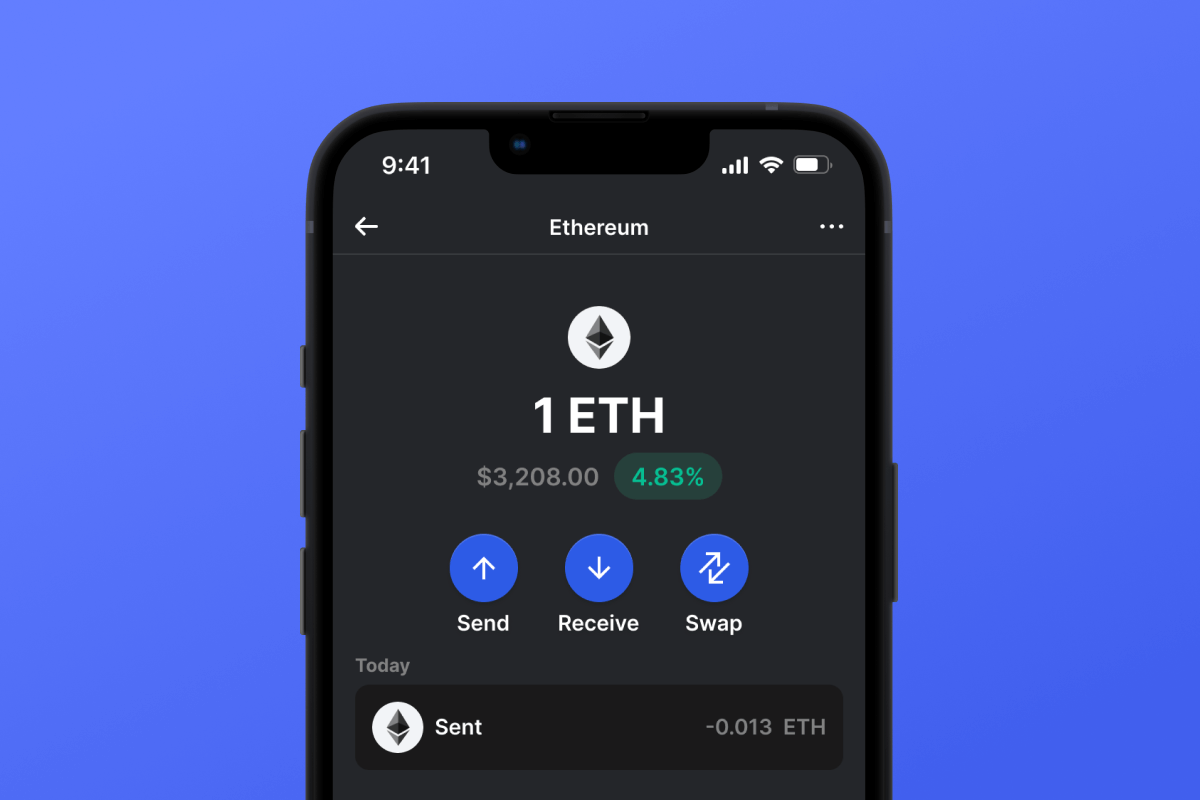
An Ethereum wallet is an app that holds the private key of an Ethereum account and signs transactions with it. The account lives on the blockchain and is identified by your 0x address: ETH, tokens, and NFTs sent to that address belong to whoever holds its key. The wallet sends and receives ETH, pays gas, and connects to decentralized apps on your behalf.
ETH is the native coin and is not a token. Stablecoins such as USDT and USDC, DeFi tokens, and memecoins on Ethereum are ERC20 tokens held on the same address, and each of their transfers still pays gas in ETH. So an Ethereum wallet always needs a little ETH, even when it mostly holds tokens.
In a self-custodial wallet, the private key is created and kept on your phone. In an exchange account, the exchange controls the key and your ETH sits in its pooled address, so a withdrawal depends on the exchange.
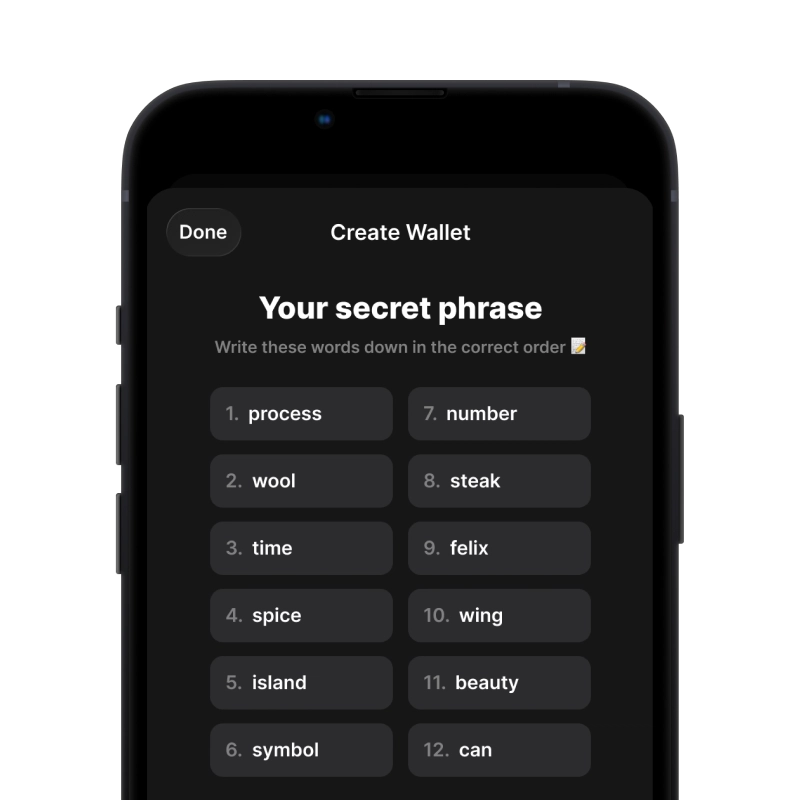
Gem Wallet is a self-custodial Ethereum wallet: it derives your Ethereum account from a 12-word recovery phrase and keeps the key in your phone’s secure storage. The same phrase restores ETH together with more than 100 other networks in the app. Gem Wallet is listed in the ethereum.org wallet directory maintained by the Ethereum Foundation.
How Ethereum Gas Fees Work
Every Ethereum transaction consumes gas, a unit of computation. A plain ETH transfer to a regular address uses 21,000 gas; a token transfer or a swap uses more, because it runs a smart contract. Since the London upgrade of August 2021, the price of gas has two parts:
- Base fee: set by the network for each block, it rises when blocks are busy and falls when they are not. The base fee is burned, not paid to anyone.
- Priority fee: a tip to the validator that includes your transaction. A higher tip gets a faster place in the next blocks.
Gas prices are quoted in gwei, one billionth of an ETH. On November 11, 2026, the base fee was about 0.26 gwei and the median tip about 0.08 gwei, so an ETH transfer cost 21,000 × 0.34 gwei = about 0.0000071 ETH, or roughly $0.015 at an ETH price of $2,077. Fees rise during busy periods, and the current price is on the Ethereum gas tracker.
Gem Wallet shows the network fee before you confirm and lets you choose Normal or Fast, or set your own base fee and priority fee. It also leaves room for the base fee to rise by up to 20% between your confirmation and the next block, so a transfer does not fail when fees jump. The room is a limit, not a surcharge: you pay the base fee the block actually charges plus your tip.
Ethereum Address Format
An Ethereum address is 42 characters: 0x followed by 40 hexadecimal characters (for example 0x71C7…976F). The mix of capital and small letters works as a checksum: if one character is mistyped, a wallet can usually tell the address is invalid. One address receives ETH, every ERC20 token, and NFTs, and it stays the same for the life of the account.
The same 0x address is also valid on Arbitrum, Base, BNB Chain, Polygon, and other EVM networks, but the balances on each network are separate. When an exchange or a friend sends you ETH, the network they pick decides where it arrives. An Ethereum address does not work on Bitcoin, Solana, or TRON, and a transfer to an address of another chain type can be lost.
Instead of a 0x address, you can send to an ENS name such as name.eth. Gem Wallet looks up the name through the Ethereum Name Service and sends only to a verified address; more about names is in What Is ENS. Before you sign a transfer, Gem Wallet also checks the destination for known scam addresses and for address poisoning, a trick in which an attacker plants a look-alike address in your history.
Stake, Swap, and Use ETH in Gem Wallet
Gem Wallet puts ETH to work right from the address that holds it:
- Staking: Gem Wallet stakes ETH through the Everstake pool, so you earn rewards without the 32 ETH of a solo validator. Rewards are added to your staked balance automatically, the in-app rate was about 3% a year as of November 2026, and Gem Wallet takes no fee of its own. Details are on the Ethereum staking page.
- Swaps on Ethereum: the built-in swap aggregator compares Uniswap, PancakeSwap, OKX DEX, and other routes on Ethereum for the exact amount, so ETH becomes USDC, USDT, or another token in one step.
- Cross-chain swaps: ETH can become BTC, SOL, or a token on another network through cross-chain providers such as THORChain, Across, and Relay, without an exchange account.
- dApps: Gem Wallet connects to Ethereum apps through WalletConnect, simulates each transaction, and scans token approvals before you sign.
- NFTs: Ethereum NFTs and ENS names appear in the Collectibles section next to your ETH.
To start with no ETH at all, buy Ethereum with a card in the app, and the ETH arrives on your own address.
Download Gem Wallet to get your Ethereum address in under two minutes and keep ETH under your own keys on iOS and Android.