


What Is the Lightning Network?
The Lightning Network (LN) is a Layer 2 payment protocol built on top of Bitcoin. It was proposed in a February 2015 whitepaper by Joseph Poon and Thaddeus Dryja and went live on mainnet in 2018 to solve Bitcoin’s two limits for everyday payments: ten-minute blocks and fees that make small transfers impractical. On Lightning, payments settle in under a second and cost fractions of a cent.
As of mid-2026, the public network counts over 41,000 payment channels across roughly 17,400 nodes, holding about 5,000 BTC in public capacity - with private channels estimated to hold significantly more - and routing more than $1.1 billion in monthly payment volume. In March 2026, USDT went live on Lightning, extending the network from Bitcoin-only payments to stablecoin transfers.
How Lightning Payments Work
Lightning moves payments off-chain through payment channels. Two parties lock Bitcoin in a shared on-chain transaction, then exchange instant, fee-free balance updates between themselves; the blockchain is only touched when the channel opens or closes. Payments to anyone else are routed across the network through connected channels, secured by smart contracts that make every hop trustless. The trade-offs: opening and closing channels costs a regular on-chain fee, and a single payment can’t exceed the capacity of the channels it travels through - which is why Lightning shines for small and medium transfers rather than moving large sums.
What Is a Lightning Network Wallet?
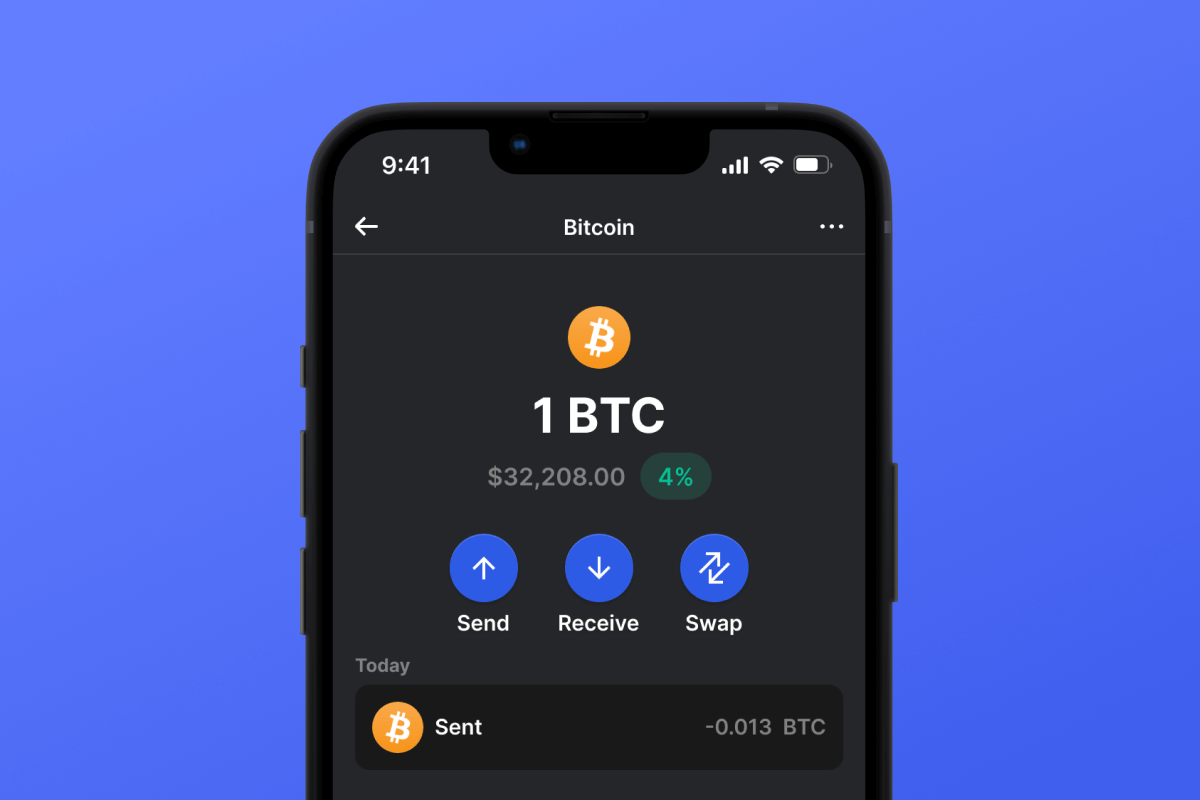
A Lightning Network wallet is an app that can send and receive Bitcoin over Lightning, not just on the main chain. Not every Bitcoin wallet supports it: Lightning requires dedicated infrastructure from the wallet’s developers, so LN support always has to be built in deliberately.
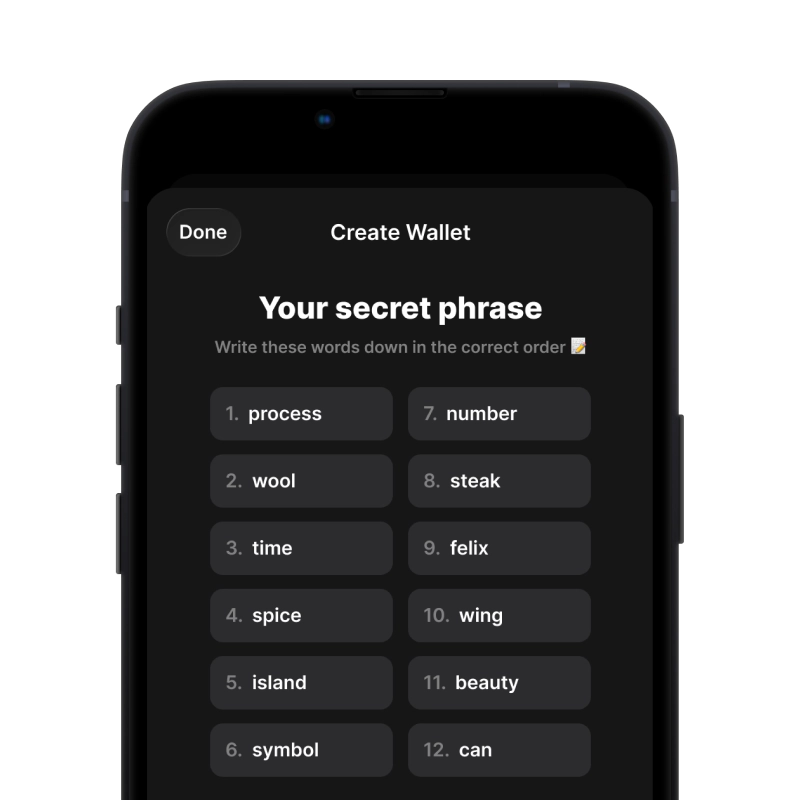
Gem Wallet is a self-custodial Lightning Network wallet: your keys stay on your device, protected by a single 12-word recovery phrase, and your Bitcoin remains yours whether it moves on-chain or over Lightning - no accounts, no KYC, no tracking.
Lightning vs On-Chain Bitcoin
| Parameter | Lightning Network | Bitcoin On-Chain |
|---|---|---|
| Speed | Under a second | ~10 minutes to hours |
| Typical fee | Fractions of a cent | From cents to several dollars |
| Best for | Micropayments, tips, everyday purchases | Large transfers, long-term storage |
| Settlement | Off-chain, via payment channels | Every transaction on the blockchain |
Data source: 1ML Lightning Network statistics
Why Gem Wallet for Lightning
- Self-custody: only you hold the keys to your Bitcoin - on-chain and on Lightning alike. Gem Wallet never has access to your funds.
- Open source: the wallet’s code is fully public, so anyone can verify how Lightning support is implemented.
- Instant micropayments: pay for small things with Bitcoin without waiting for confirmations or losing half the amount to fees.
- Buy Bitcoin: buy BTC with a credit or debit card, Apple Pay, or Google Pay through integrated fiat on-ramp providers.
- One app, 100+ chains: manage Bitcoin and Lightning alongside Ethereum, Solana, and every other supported network with one recovery phrase.
Download Gem Wallet and try the Lightning Network - Bitcoin payments that arrive in under a second, cost fractions of a cent, and never leave your control.