

What Is Litecoin?
Litecoin is a proof-of-work cryptocurrency created by Charlie Lee and launched in October 2011. Its code began as a fork of Bitcoin, and LTC is its native coin. Our guide to the Litecoin blockchain covers its history and design.
The supply is capped at 84 million LTC, and about 77.8 million were in circulation as of November 2026, according to Blockchair. Miners receive 6.25 LTC per block. That reward halves every 840,000 blocks, and the next halving is expected around mid-2027.
Litecoin and Bitcoin share the same transaction model and differ in these parameters:
| Parameter | Litecoin | Bitcoin |
|---|---|---|
| Block target | 2.5 minutes | 10 minutes |
| Mining algorithm | Scrypt | SHA-256 |
| Supply cap | 84 million | 21 million |
Data source: Litecoin Wiki and Bitcoin Wiki, checked November 6, 2026.
What Is a Litecoin Wallet?
A Litecoin wallet is an app that holds the private keys to your Litecoin addresses. The coins are not inside the app: the blockchain records them against your address, and your key signs every spend. That key stays with the platform on an exchange and with you in a self-custodial wallet.
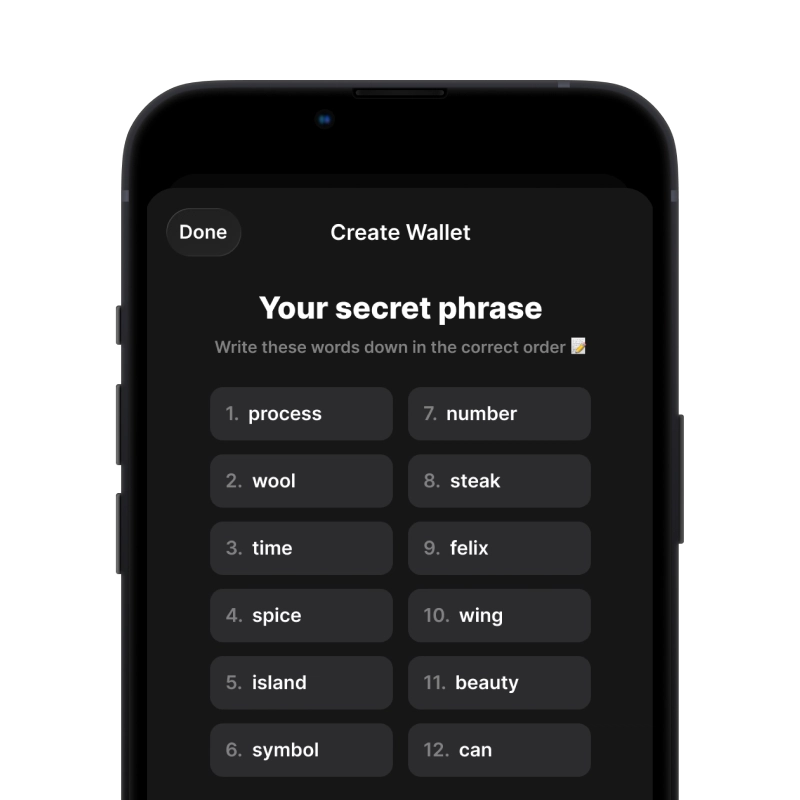
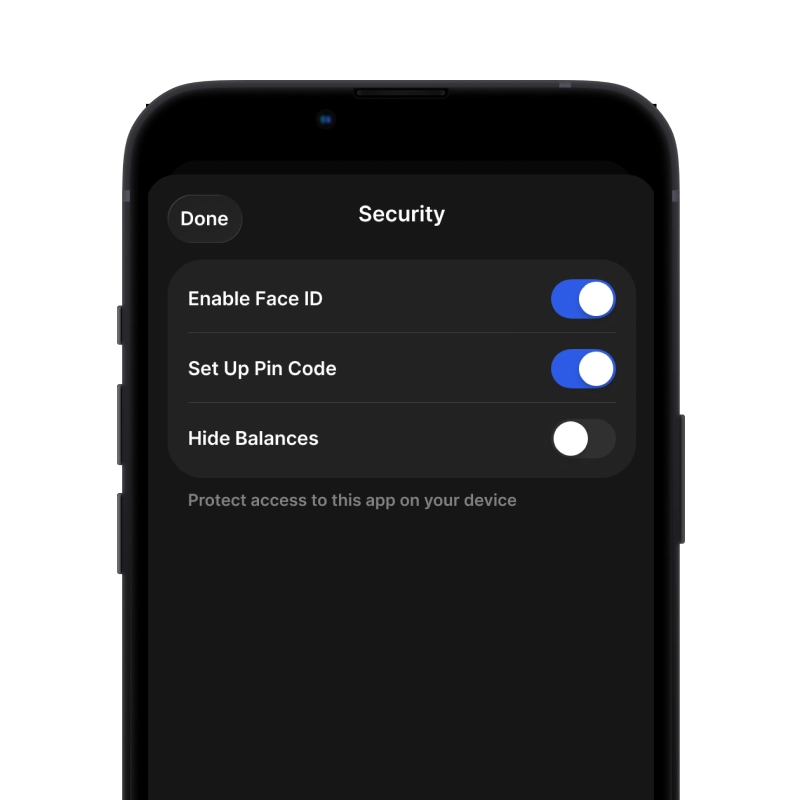
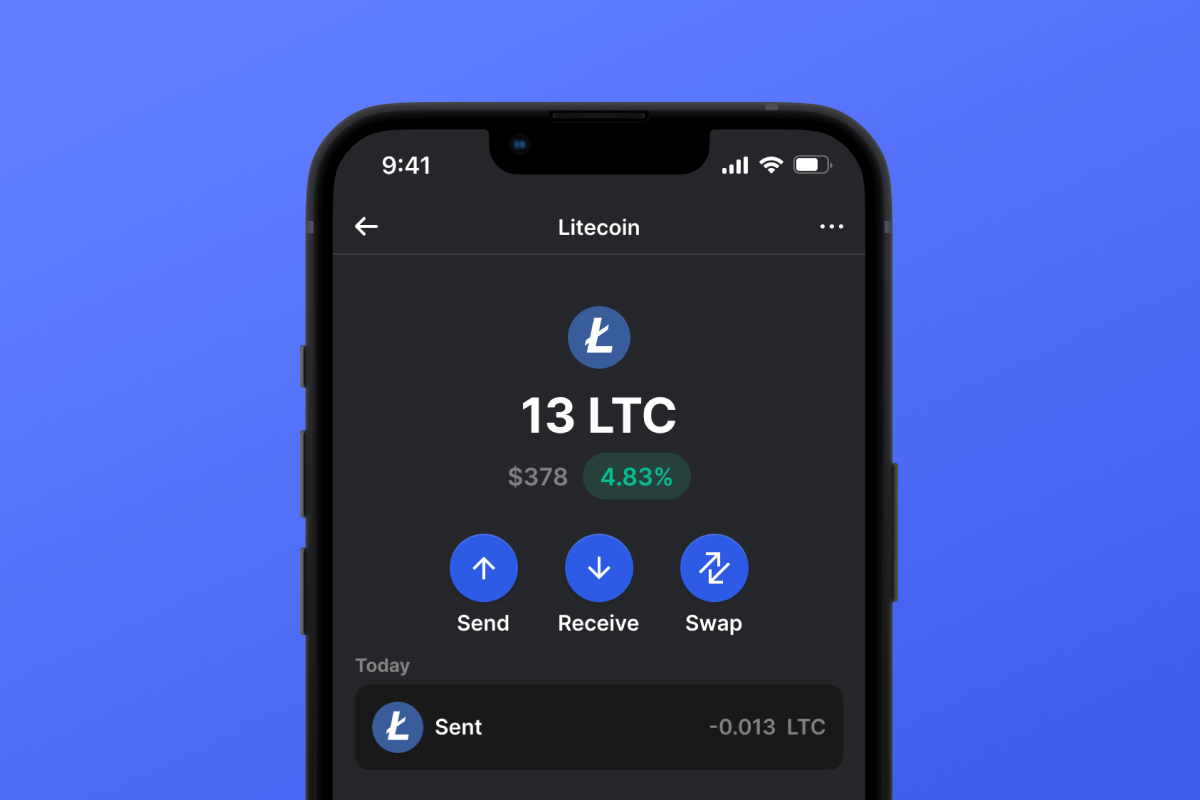
Gem Wallet is a self-custodial Litecoin wallet: your keys live in Apple Keychain on an iPhone and in Google Tink on Android. Your 12-word phrase restores them on a new device, so keep it safe offline, because nobody can recover it for you. The wallet code is open source, and Gem Wallet regularly passes independent security audits.
To use a Litecoin wallet you already have, import its 12-word phrase.
What a Litecoin Transfer Costs
A Litecoin transfer spends earlier outputs and creates new ones: one for the recipient and usually one for the change that returns to you. The fee is paid in LTC and depends on the size of the transaction in virtual bytes (vB), not on the amount. Sending 1 LTC or 1,000 LTC from one output costs the same, while a payment assembled from many small deposits costs more.
- Size: a native SegWit transfer with one input and two outputs takes about 141 vB.
- Rate: the fee rate is set in litoshi per vB. At 5 litoshi per vB, that transfer costs 705 litoshi, or 0.00000705 LTC.
- Recent cost: in the 24 hours to November 5, 2026, the median fee on the network was 705 litoshi, about $0.0004, and the average 4,559 litoshi, about $0.0024, according to Blockchair.
The network targets one block every 2.5 minutes, so a first confirmation usually arrives within minutes. Exchanges and merchants set their own number of required confirmations.
Gem Wallet shows the network fee before you confirm and lets you choose the transaction speed or set a custom fee rate.
Litecoin Addresses: ltc1, M, and L
Your Litecoin address in Gem Wallet is a native SegWit address of 43 characters starting with ltc1. Gem Wallet also sends to the older Litecoin formats, which start with M and L.
Litecoin and Bitcoin are separate networks, so Gem Wallet rejects a bc1 address on a Litecoin send and stops a wrong paste before it costs you coins.
Contacts in Gem Wallet let you save the addresses you use often.
Buy, Sell, and Swap LTC in Gem Wallet
Gem Wallet lets you buy Litecoin by card through on-ramp providers, with the coins delivered to your own address, and sell LTC for fiat through providers in the app. Any identity check is run by the provider, not by the wallet, and the providers available to you depend on your country.
Gem Wallet also lets you swap LTC for assets such as BTC or USDT. These swaps cross networks, so they run through cross-chain providers such as THORChain and finish only after the sending network confirms your transaction. Swap Details names the provider, and you can pick another when more than one has quoted. Set a price alert to hear when LTC moves.
Download Gem Wallet for iOS, Android, or APK, and it gives you a self-custodial Litecoin wallet with your own ltc1 address.