

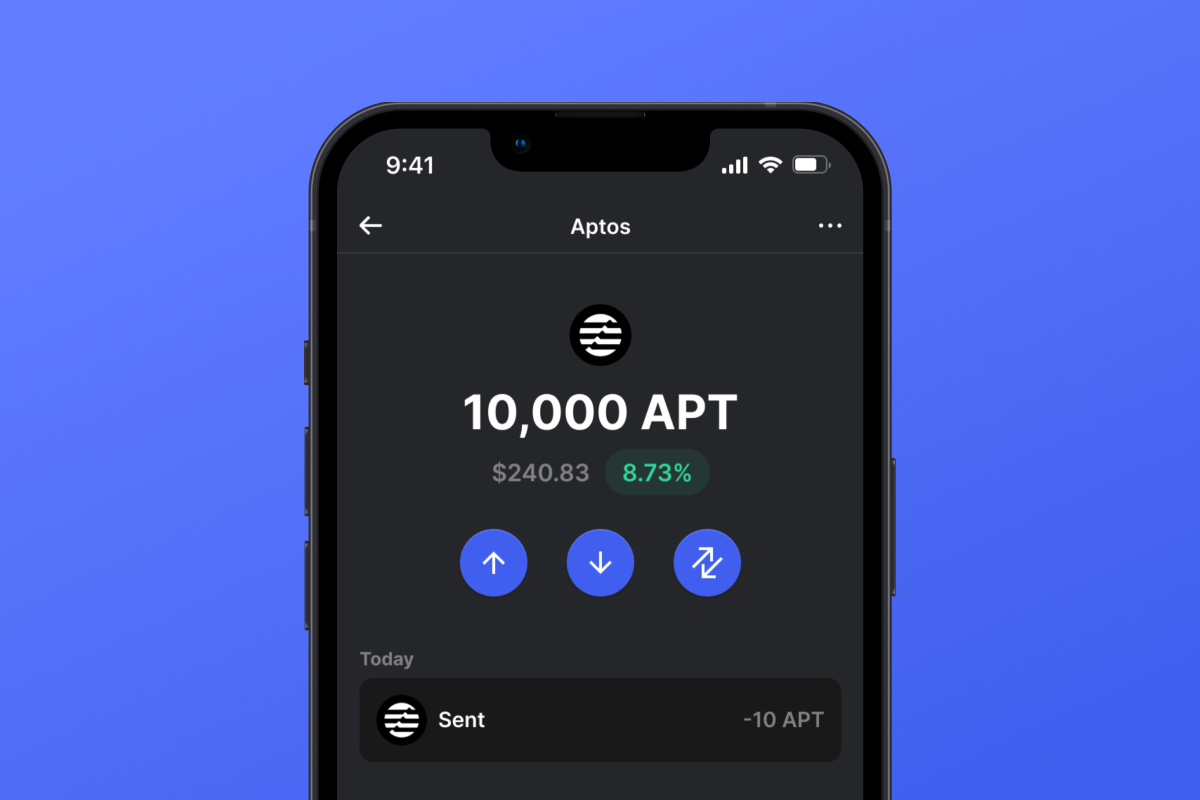
What Is Aptos?
Aptos is a layer-1 proof-of-stake blockchain built by Aptos Labs, a team founded by former engineers of Meta’s Diem project. Its mainnet launched in October 2022. Smart contracts on Aptos are written in Move, a language that treats coins and tokens as resources that cannot be copied or dropped by mistake.
Aptos runs transactions in parallel with an engine called Block-STM, which executes a whole block at once and re-runs only the transactions that conflict. Blocks are agreed on by AptosBFT, a Byzantine fault tolerant consensus run by validators who stake APT. APT is the native coin of the network: it pays gas, secures the chain through staking, and had a circulating supply of about 884 million as of November 2026. More background is in our guide What Is the Aptos Blockchain.
What Is an Aptos Wallet?
An Aptos wallet is an app that holds the private key of an Aptos account and signs transactions with it. The account has one address, and that address owns your APT, your Aptos tokens, and your staked APT. The wallet sends and receives coins, pays gas in APT, and delegates APT to validators on your behalf.
In a self-custodial wallet, the key is created and kept on your phone. On an exchange, the exchange holds the key, and every withdrawal waits for its approval.
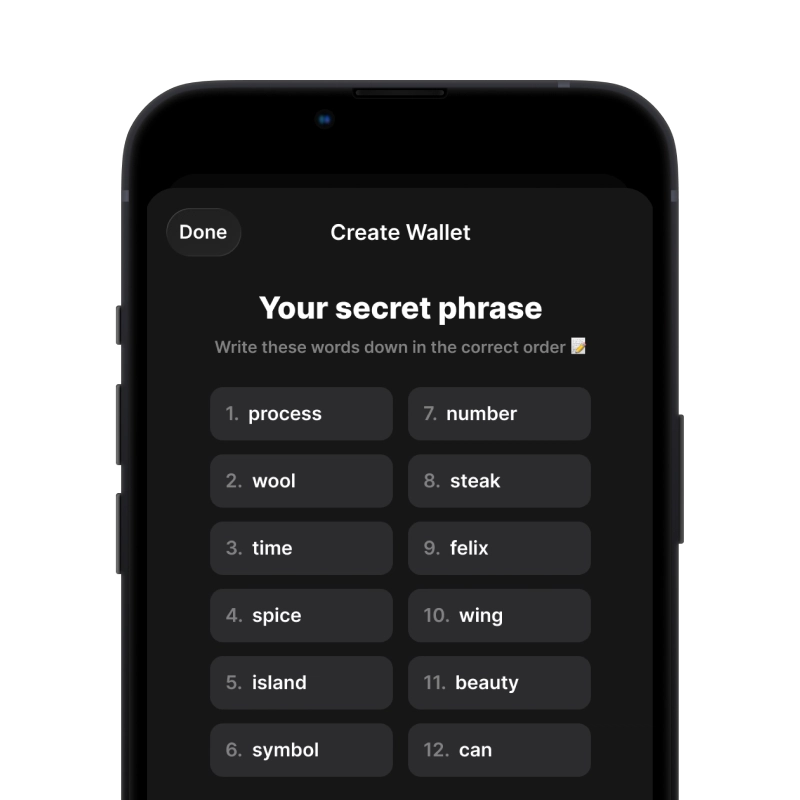
Gem Wallet is a self-custodial Aptos wallet: it derives your Aptos account from a 12-word recovery phrase and stores the key in your phone’s secure hardware storage. An Aptos account you already have can be imported with its recovery phrase or its private key. Gem Wallet is also listed in the Aptos ecosystem directory.
How Aptos Gas Fees Work
Every Aptos transaction pays gas in APT, counted in octas, where 1 APT equals 100 million octas. The fee is the gas units a transaction uses, multiplied by the gas unit price:
- Gas units: the execution and storage work of the transaction. A plain transfer uses a few hundred units at most, a swap uses more.
- Gas unit price: set by the sender, at or above the network minimum. On November 12, 2026, the network estimate was 100 octas per unit, and 150 octas for prioritized transactions.
- Storage: a transaction that creates new data on chain, such as a token balance on a fresh address, also pays a storage charge in APT.
On November 12, 2026, a token transfer of about 150 gas units cost 0.00015 APT, far below one cent. Gem Wallet shows the exact fee before you sign and lets you choose Normal or Fast. Token transfers, staking, and swaps on Aptos all pay gas in APT, so keep a small APT balance next to your tokens.
Aptos Address Format
An Aptos address is 0x followed by 64 hexadecimal characters (for example 0x9f3c…7b21). It is derived from your public key, so the same recovery phrase always restores the same address, and one address receives APT and every Aptos token. Sending APT to an address that has never been used creates the account on the spot, so a new Gem Wallet address can receive APT right away.
When you send, Gem Wallet also accepts .apt names from Aptos Names and resolves the name to its address before you sign.
| Network | Address format | Length after 0x |
|---|---|---|
| Aptos | 0x + hexadecimal | 64 characters |
| Sui | 0x + hexadecimal | 64 characters |
| Ethereum and EVM networks | 0x + hexadecimal | 40 characters |
Data source: Aptos, Sui, and Ethereum developer documentation, as of November 2026.
An Aptos address and a Sui address look the same but belong to different blockchains. Choose the Aptos network whenever an exchange or a sender asks for it.
APT, USDT, and USDC in One Aptos Wallet
Aptos tokens live on the same address as your APT, and Gem Wallet shows them next to your APT balance:
- USDT: Tether’s USDT issued natively on Aptos. More on the USDT wallet page.
- USDC: Circle’s native USDC on Aptos. More on the USDC wallet page.
- USDe: the synthetic dollar of Ethena, issued on Aptos.
- USD1: the dollar stablecoin of World Liberty Financial, issued on Aptos.
Stake and Swap APT in Gem Wallet
Gem Wallet puts APT to work from the address that holds it:
- Staking: delegate APT, starting at 11 APT, to an Aptos delegation pool of your choice. Rewards compound into your stake every epoch, and unstaked APT becomes free to withdraw when the pool’s lockup cycle of up to 14 days ends. The reward rate shown in the app was about 2.6% a year in November 2026. Details are on the APT staking page.
- Swaps on Aptos: the built-in swap routes APT, USDT, and USDC through Hyperion concentrated-liquidity pools, directly or in two hops, and checks the quote before you sign. How it works is explained in Hyperion swaps on Aptos.
- Cross-chain swaps: APT can become SUI, XRP, or TRX through cross-chain providers such as Swaps.xyz, without an exchange account.
- Buying APT: to start with no APT at all, buy APT with a card in the app, and the coins arrive on your own Aptos address.
Download Gem Wallet to get your Aptos address in under two minutes and keep APT, USDT, USDC, and staked APT under your own keys on iOS and Android.