

Move USDC Between Networks
Gem Wallet lets you bridge USDC between Ethereum, Base, Arbitrum, Solana, BNB Chain and other networks through a cross-chain bridge right in the app. USDC is one stablecoin, but Circle issues it separately on Ethereum, Base, Arbitrum, Solana and other networks, and a normal transfer never leaves its network. Gem Wallet finds a provider for the route and delivers USDC to your address on the other network.
Gem Wallet holds USDC on all these networks in one USDC wallet, with one 0x address for Ethereum, Base, Arbitrum and BNB Chain and a separate address for Solana.
How a Bridge Works in Gem Wallet
A bridge moves value from one network to another. A classic bridge locks your tokens on the first network and issues a wrapped copy on the second, which apps may not accept and which you later have to unwrap. Gem Wallet works differently: providers such as Across and Relay hold liquidity on both networks, take your USDC on one side and pay out native USDC on the other, the same token apps and exchanges there accept.
Speed, Cost and Safety
- Speed. Transfers between Ethereum, Arbitrum and Solana usually take from a few seconds to about 20 seconds.
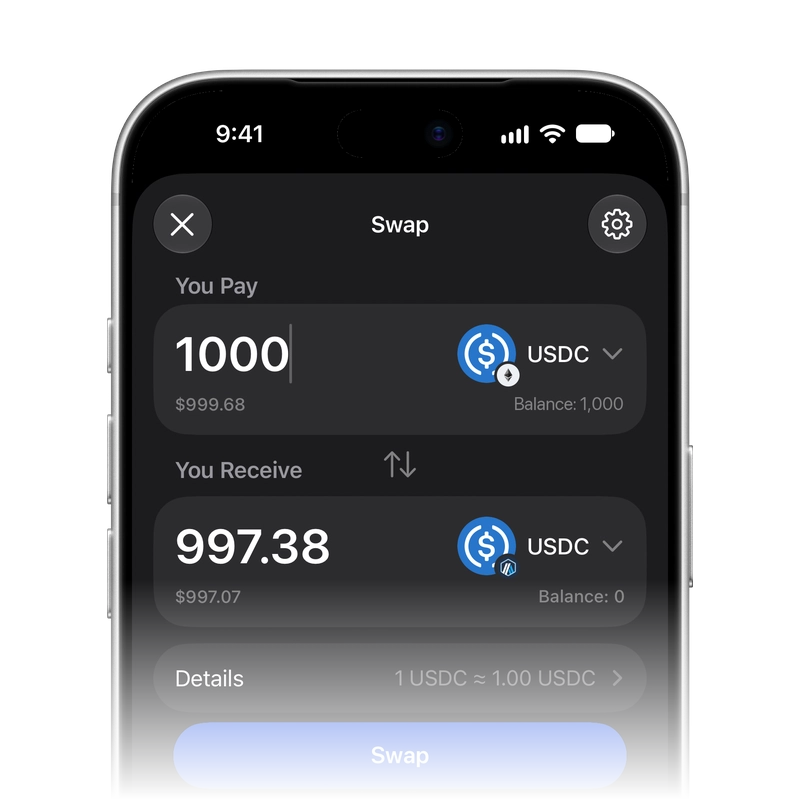
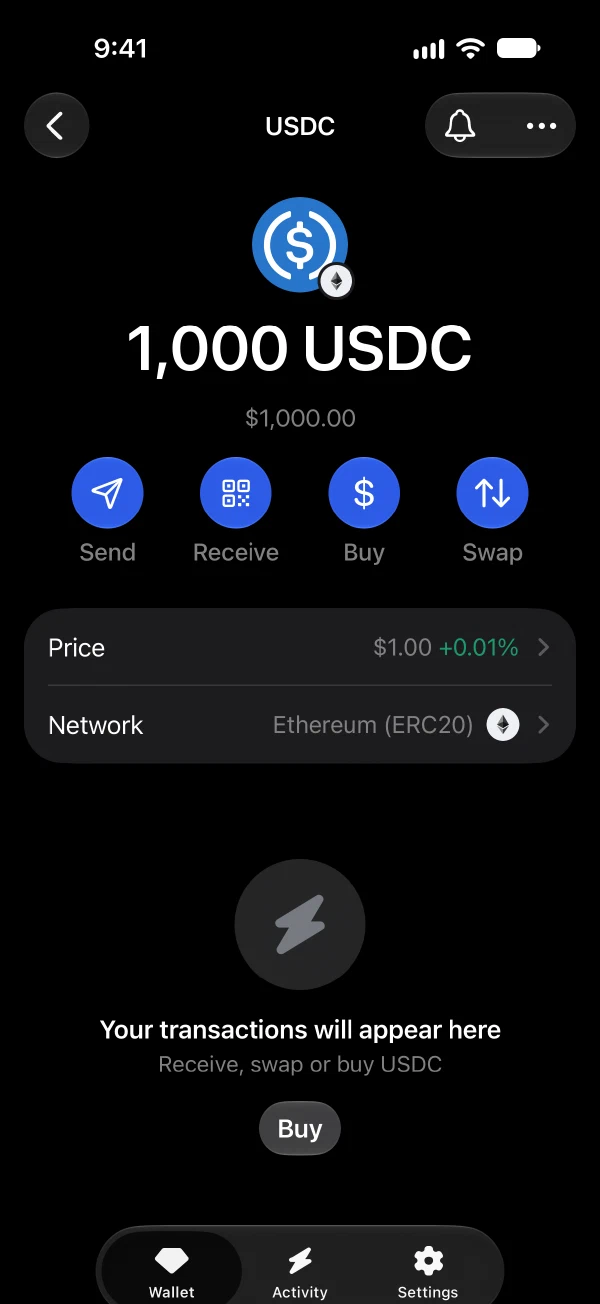
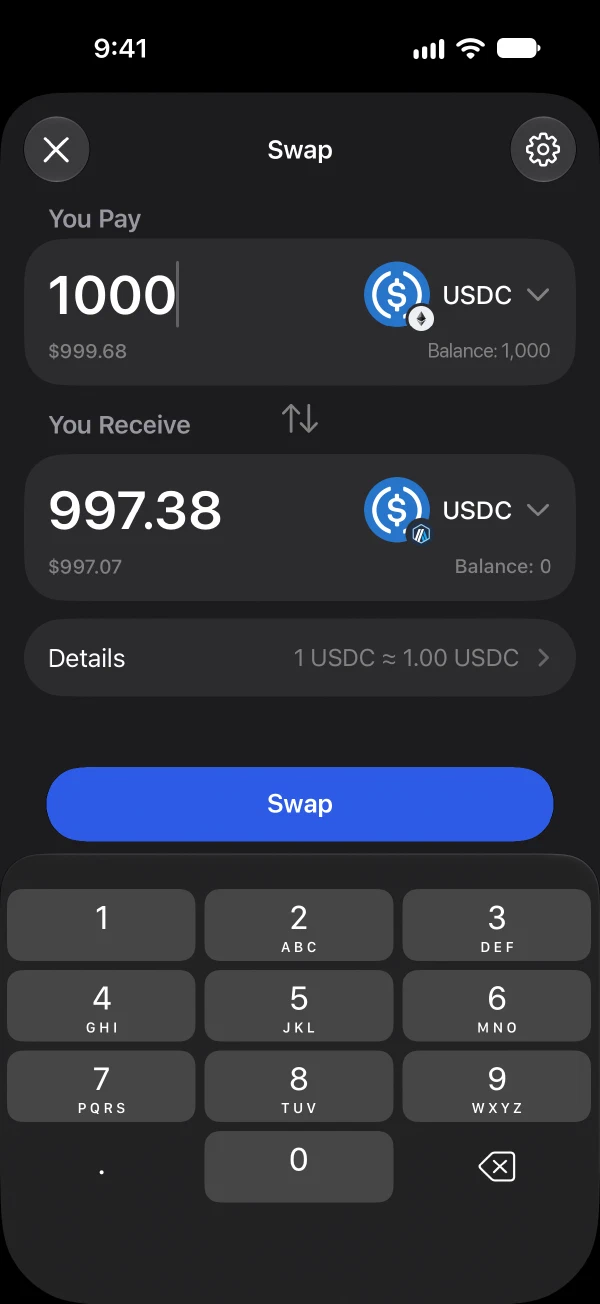
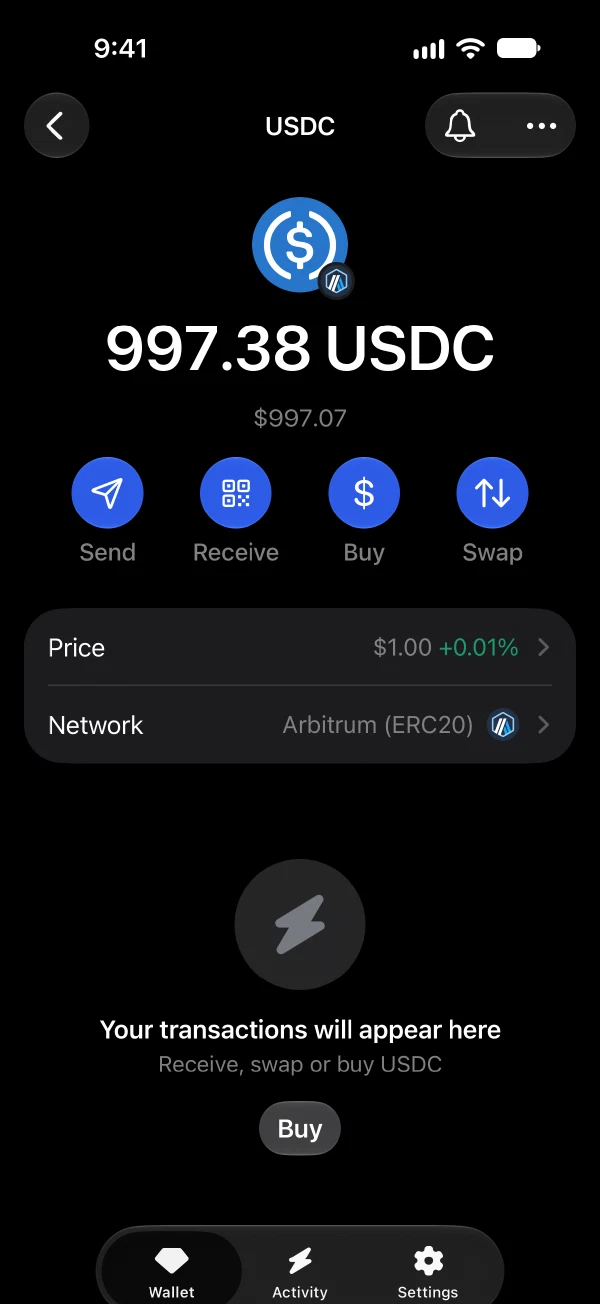
- Total cost. About 0.3% of the amount between EVM networks and about 0.5% to Solana, plus the network fee on the network you send from: 1,000 USDC sent from Ethereum arrived as about 997 USDC on Arbitrum. Current network fees are in the network fee tracker.
- Native USDC, not USDC.e or USDbC. On Arbitrum and Base, Gem Wallet shows which USDC you pick before you confirm.
- No address to copy. Gem Wallet sends USDC to your own address on the other network, so there is nothing to paste and no risk of a typo.
- Beware of fake bridge websites. Phishing sites copy well-known bridges and ask you to connect a wallet and sign approvals. In Gem Wallet you never connect to a website to bridge: the quote and the signature stay in the app.