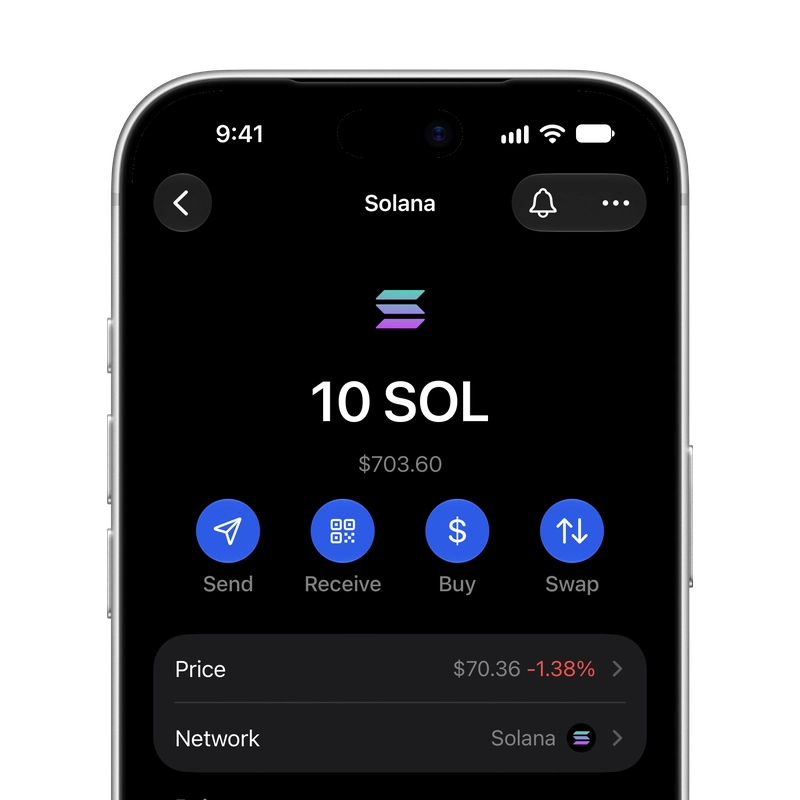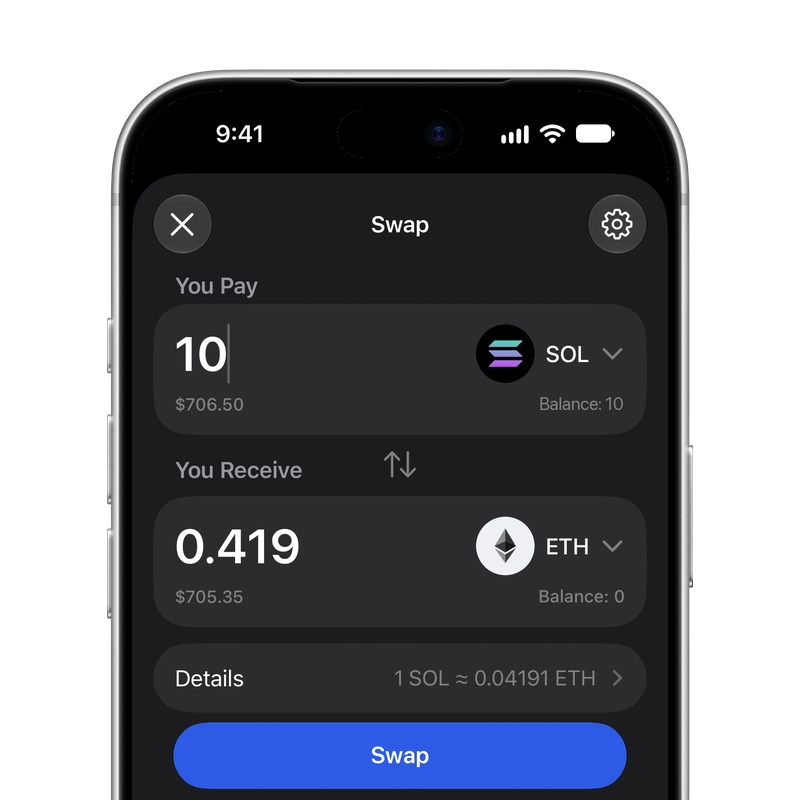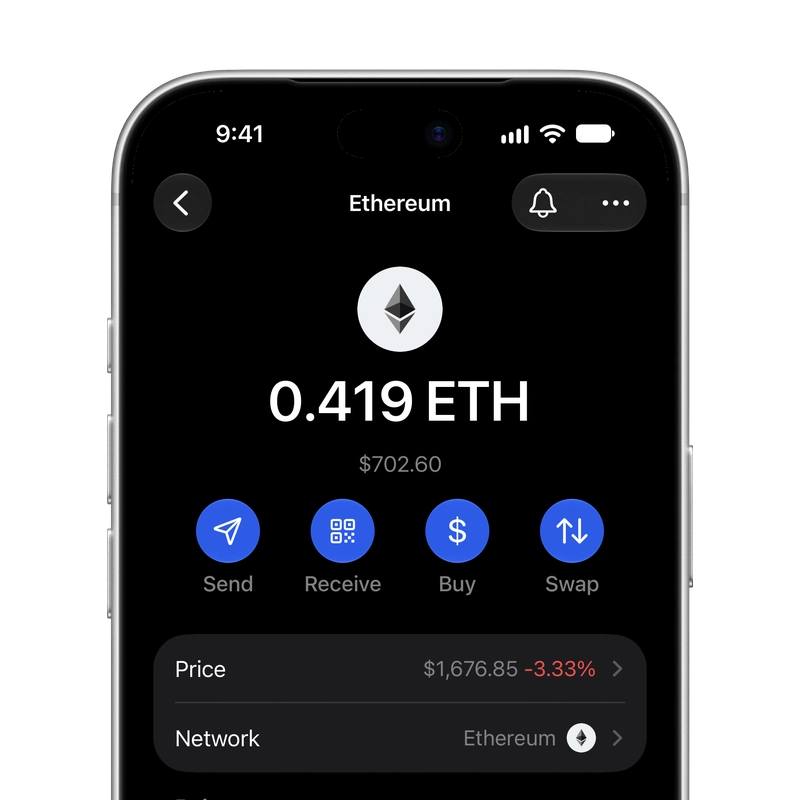



What Is a Cross-Chain SOL to ETH Swap?
A SOL to ETH swap turns SOL, the native coin of Solana, into ETH, the coin of Ethereum that also pays gas on layer 2 networks such as Base and Arbitrum. No single transaction can do this on one chain: the provider receives your SOL on Solana and releases ETH on the EVM network you picked, so the swap is cross-chain by nature. SOL holders make it to take profit into the second largest coin by market capitalization, to get ETH for gas before they use an Ethereum app, or to bring funds back after time on Solana. Watch out for tokens called ETH that live on Solana: they are bridged SPL tokens that track the price of ETH, and an Ethereum address cannot receive them. This swap pays out native ETH, the coin that every Ethereum app, exchange deposit and ERC20 transfer from your 0x address works with. To go back later, ETH to SOL runs the other way.
How Gem Wallet Finds the Best Rate
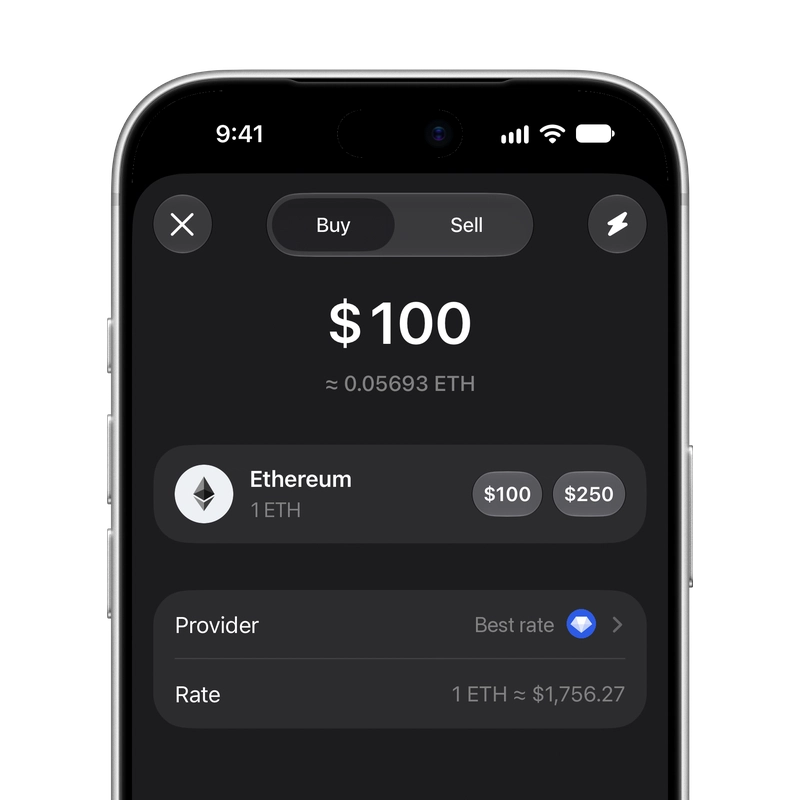
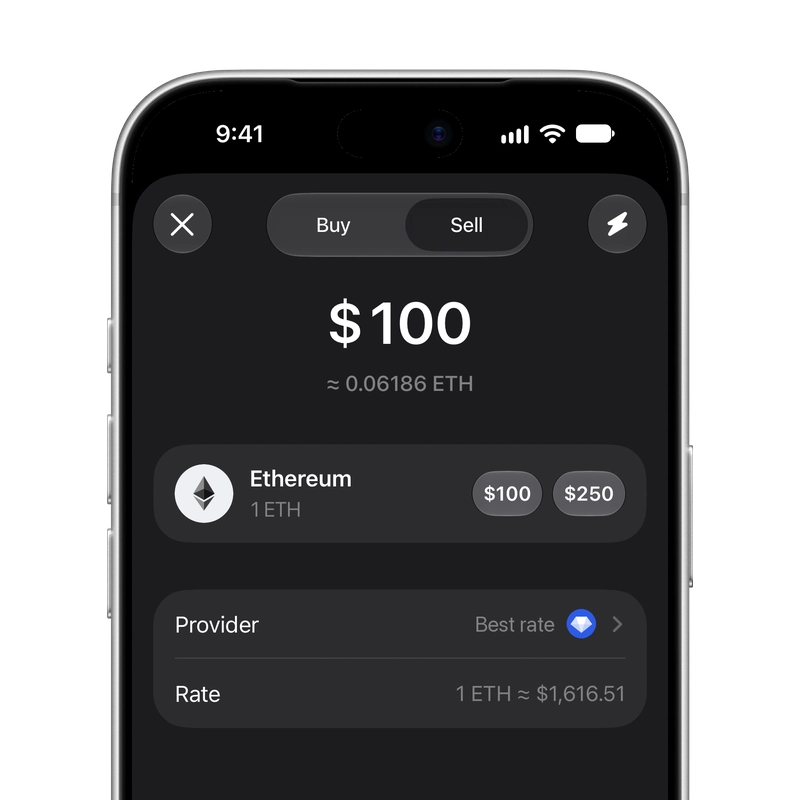
Four kinds of liquidity compete for a SOL to ETH swap. Chainflip trades through its vault and its own pools, THORChain through its native liquidity pools, Mayan through an auction in which drivers bid to fill your order on the EVM side, and Relay through solvers that pay out ETH from their own funds. Gem Wallet asks the providers that serve the network you picked: all four for ETH on Ethereum, Mayan and Relay for ETH on Base or Arbitrum. For a Chainflip swap, the Solana transaction carries the minimum price and a refund address, and Confirm checks that both match the quote, so the trade either clears within your limit or returns the SOL. Out of 20+ swap providers, the quote with the most ETH is shown with its rate, estimated time and minimum ETH, and Gem Wallet’s fee is already included. More on the auction model: Mayan in Gem Wallet.
SOL to ETH Networks & Fees
SOL always leaves from Solana, so the one fee you pay is a Solana fee, in SOL. The receiving network is your choice, and it decides what your ETH costs to use next:
| Network | Side of the swap | Network fee you pay | Typical time |
|---|---|---|---|
| Solana | Sends SOL to the provider | Under $0.01, paid in SOL | About 0.5 seconds per block |
| Ethereum | Receives native ETH | None - it is in the quote; later, about $0.02 for an ETH transfer, $0.07 for an ERC20 transfer and $0.50 for a DEX swap | 12-second blocks |
| Base | Receives native ETH | None - it is in the quote; later, under $0.01 for an ETH transfer | 2-second blocks |
| Arbitrum | Receives native ETH | None - it is in the quote; later, under $0.01 for an ETH transfer | About 1 second per block |
Network fees: Gem Wallet gas tracker, 2026-11-24 UTC; typical cross-chain times: completed Gem Wallet swaps, September-November 2026.
Live network fees for every chain: Gem Wallet gas tracker.
A Solana fee under a cent does not make the whole swap cost a cent. The provider’s cost of paying out ETH on the other network is part of the quote, which is why the minimum ETH on Details is the number to compare between providers. If you keep tokens on Solana after the swap, leave a little SOL there too: every later SPL transfer or swap on Solana is paid in SOL.
The ETH that lands is the gas coin of its network, so the address can send, swap or approve tokens at once. Ethereum, Base and Arbitrum share one 0x address in Gem Wallet, but each balance stays on its own network: ETH on Base pays Base fees, not Ethereum ones. ETH you plan to hold on Ethereum can earn rewards through Ethereum staking.