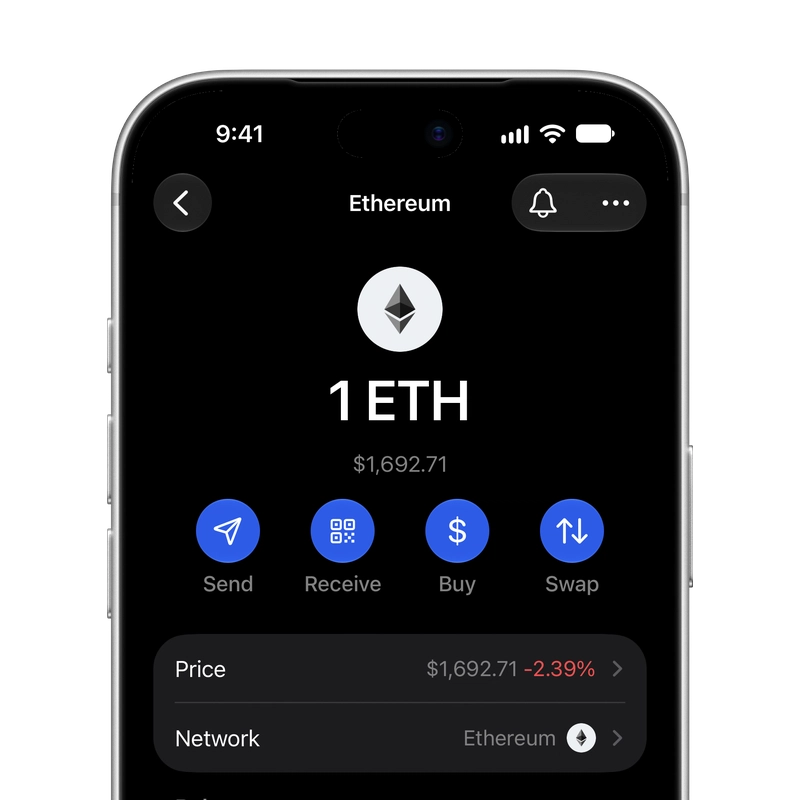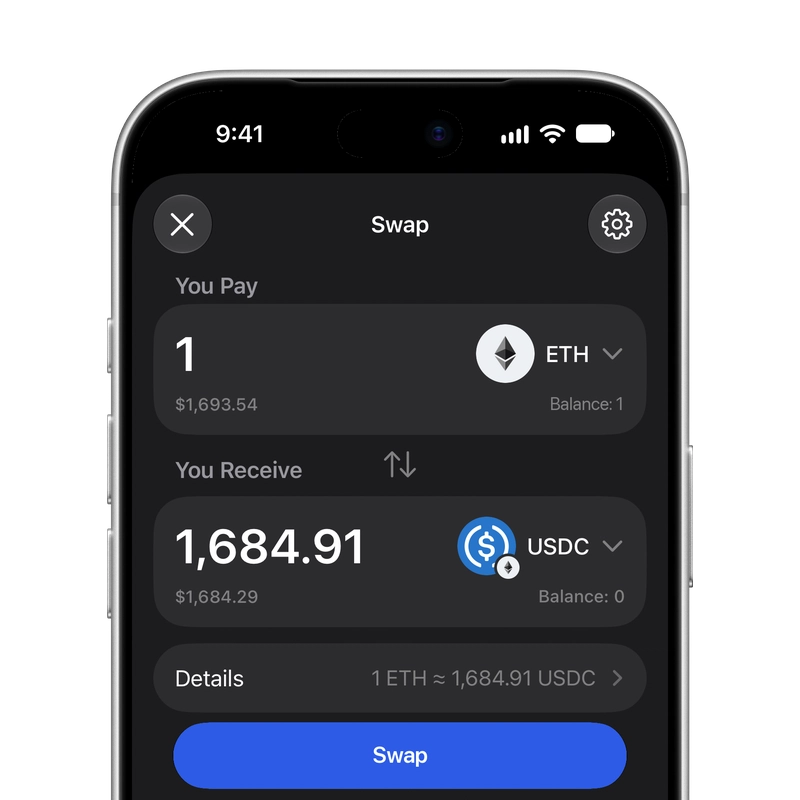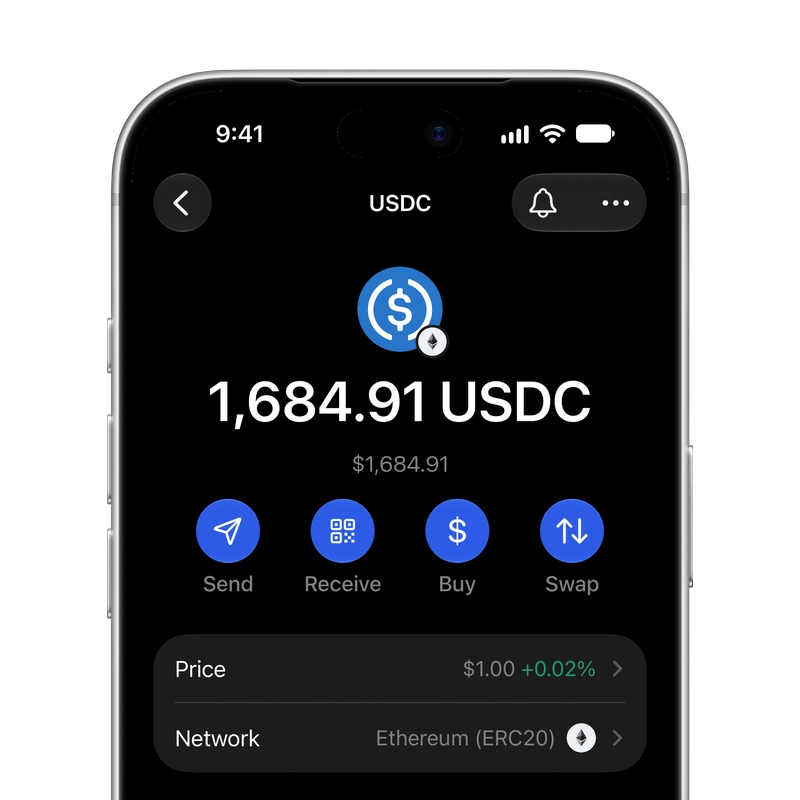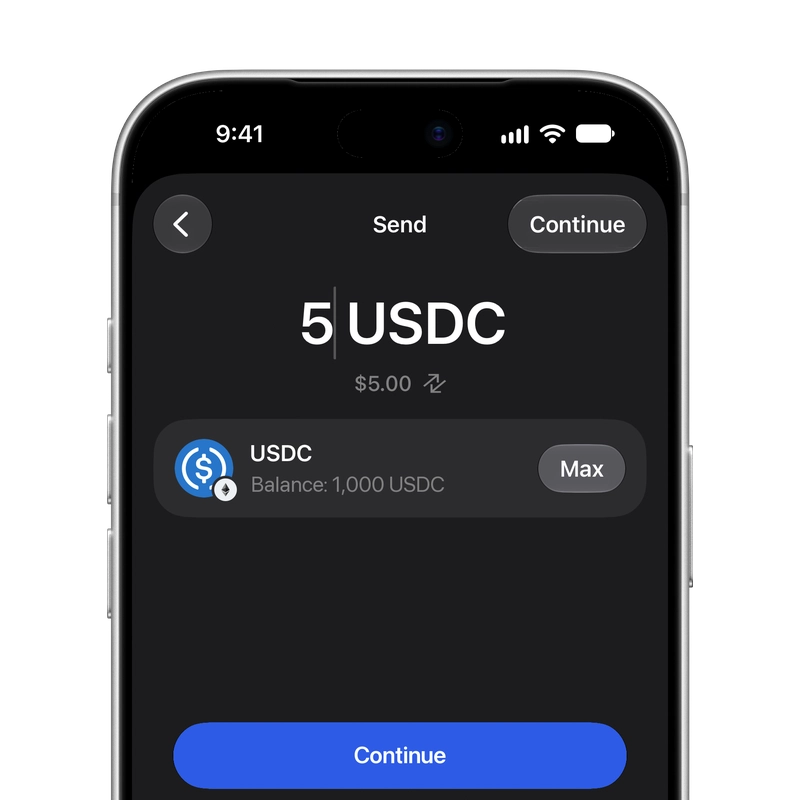


What Is an ETH to USDC Swap?
An ETH to USDC swap turns ETH, the coin that pays gas on Ethereum and on its layer 2 networks, into USDC, the dollar stablecoin issued by Circle and redeemable 1:1 for US dollars. People make it to keep the value of their ETH in dollars, to get the stablecoin that many DeFi apps and payment services settle in, or to wait out a falling market without leaving the blockchain. Circle issues USDC directly on Ethereum, Base and Arbitrum, the same networks where ETH is the native coin, so in most cases the swap never leaves the network: one DEX transaction, and USDC lands at the address that held the ETH. If you need USDC on Solana or Polygon, a cross-chain provider takes the ETH and pays out USDC there. TRON is the exception: Circle stopped minting USDC on TRON in February 2024, so for a stablecoin on TRON you would swap ETH to USDT instead. The way back is USDC to ETH.
How Gem Wallet Finds the Best Rate
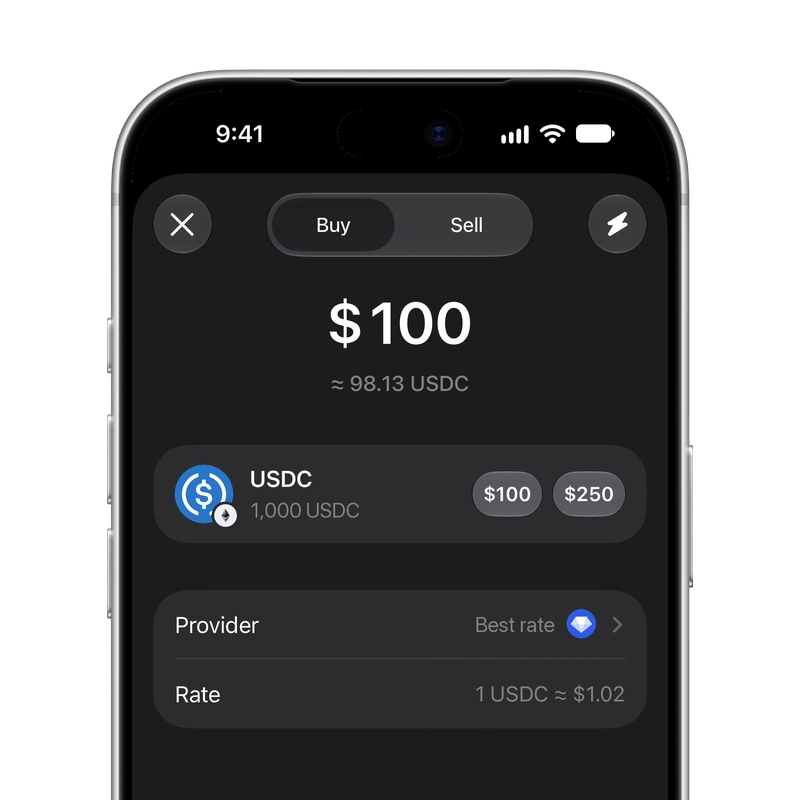
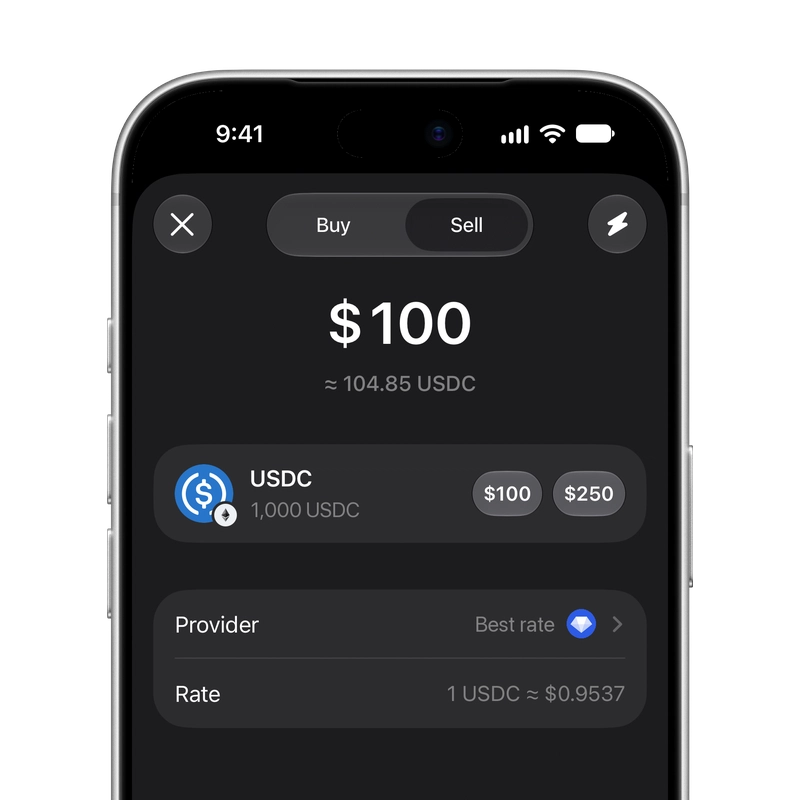
Two things set the list of providers: the network your ETH sits on and the network where USDC should land. When both are the same, DEXs on that network quote: Uniswap, PancakeSwap and OKX DEX on Ethereum, Uniswap, PancakeSwap and Aerodrome on Base, Uniswap and PancakeSwap on Arbitrum. When USDC should land on Solana, Mayan and Relay quote the cross-chain route, and for Polygon, Relay and Mayan. Gem Wallet sends the request to all of them at the same moment: a round closes 6 seconds after the request on one network and 12 seconds across networks, so a provider that stays silent is left out instead of holding up the rest. Out of 20+ swap providers, the quote that gives the most USDC comes first with its rate, estimated time and minimum USDC, and Gem Wallet’s fee is already part of that number. How the Base pools work: Aerodrome in Gem Wallet.
ETH to USDC Networks & Fees
The receiving network decides whether the swap is one transaction or a cross-chain route. On Ethereum, Base and Arbitrum the fee below is the whole network cost of the swap, paid in ETH on that network:
| Receiving network | Route from ETH | Network fee of the swap | USDC arrives in |
|---|---|---|---|
| Ethereum (ERC20) | Same network - Uniswap, PancakeSwap or OKX DEX | About $0.50, paid in ETH | Under a minute (12-second blocks) |
| Base | Same network from ETH on Base - Uniswap, PancakeSwap or Aerodrome | Under $0.01, paid in ETH | Seconds (2-second blocks) |
| Arbitrum | Same network from ETH on Arbitrum - Uniswap or PancakeSwap | About $0.02, paid in ETH | Seconds (blocks of about 1 second) |
| Solana (SPL) | Cross-chain - Mayan or Relay | The fee of the network your ETH leaves from | Under 3 minutes |
| Polygon | Cross-chain - Relay or Mayan | The fee of the network your ETH leaves from | Under a minute |
Network fees: Gem Wallet gas tracker, 2026-11-24 UTC; typical cross-chain times: completed Gem Wallet swaps, September-November 2026.
Live network fees for every chain: Gem Wallet gas tracker.
The Ethereum fee is set by gas demand at the moment, not by the amount of ETH you swap, which is why a $50 swap costs the same network fee as a $5,000 one. On Base and Arbitrum the same step costs a cent or less. A cross-chain route charges the fee of the sending network plus the delivery on the other side, and the quote already counts both. Pick the network you will use the USDC on: the app or person you pay names the network it accepts.
USDC is a token, so every later USDC transfer is paid in the coin of its network: $0.07 in ETH on Ethereum and under $0.01 on Base, Arbitrum, Solana and Polygon, paid in ETH, SOL or POL (gas tracker, 2026-11-24). If you swap all your ETH on a network, leave a little of it there for those fees. What stands behind each USDC token is covered in is USDC safe to hold.