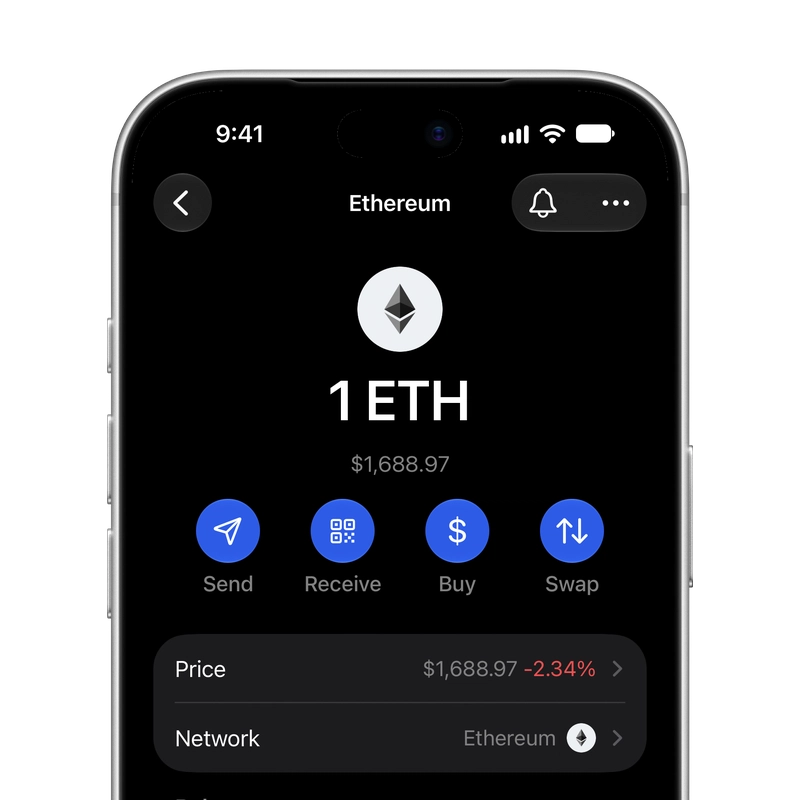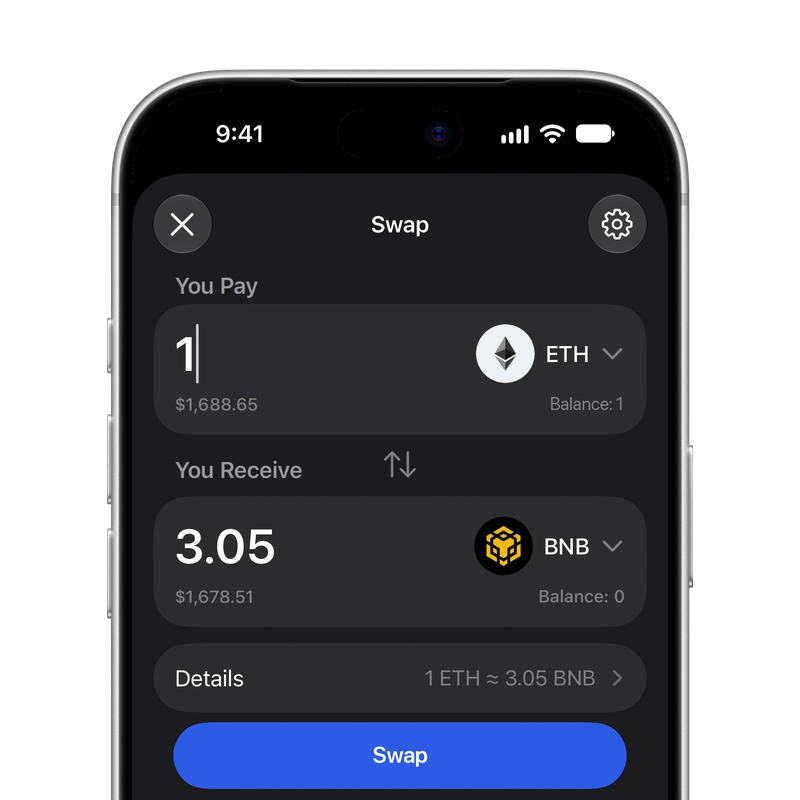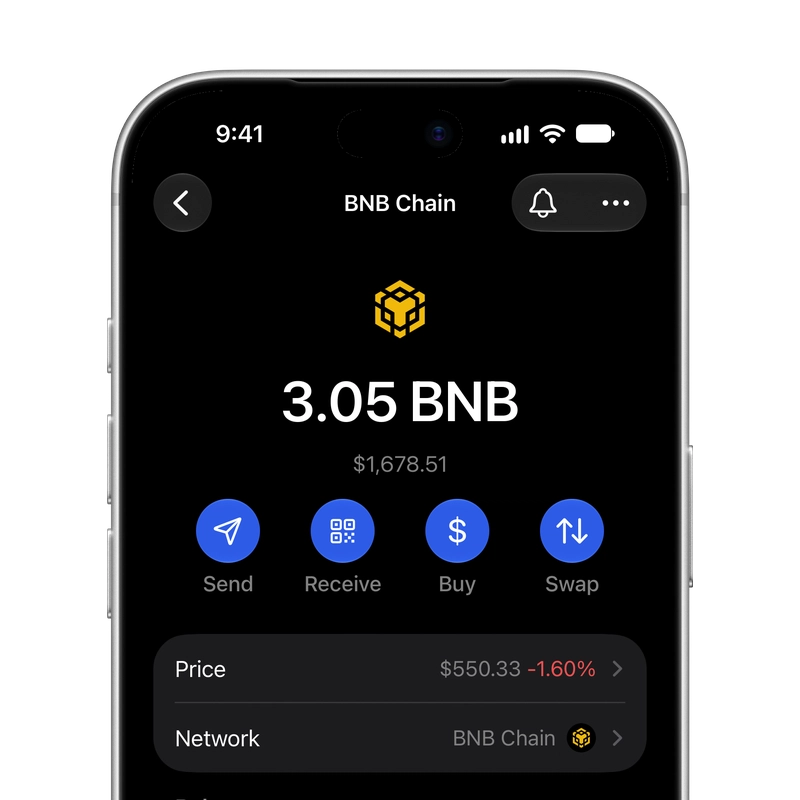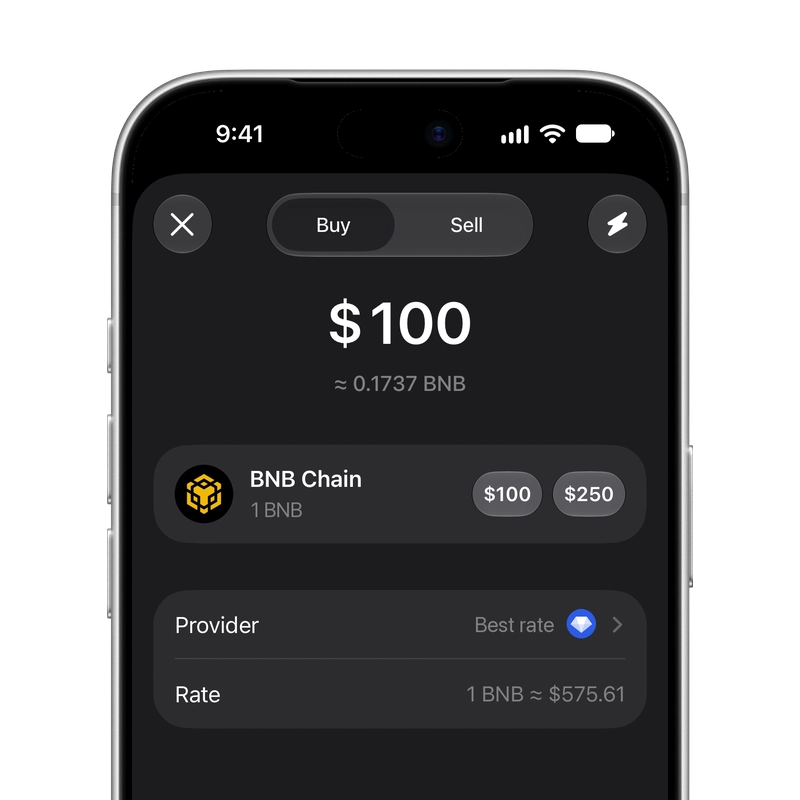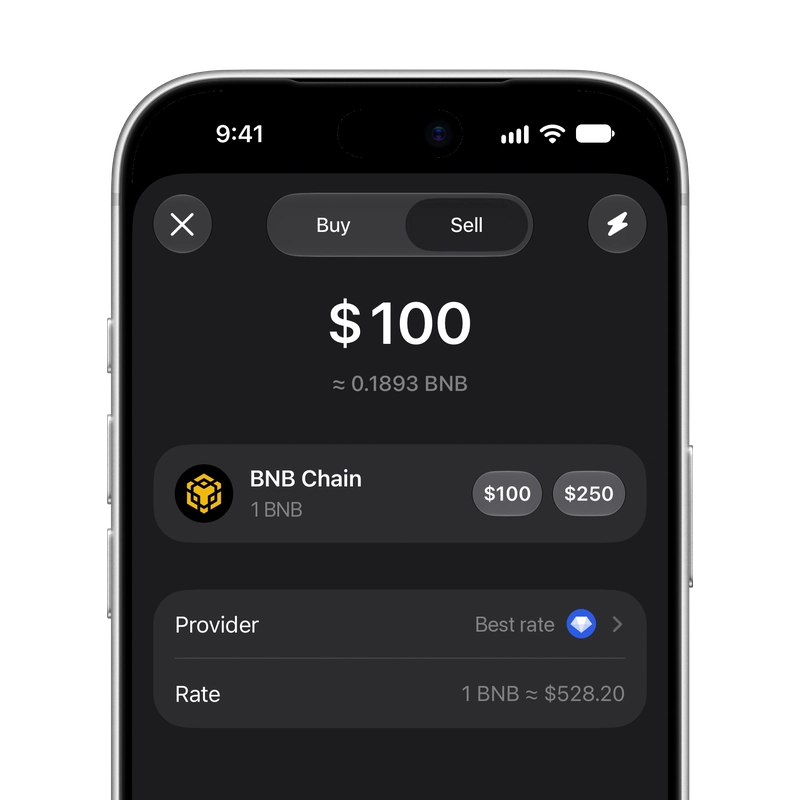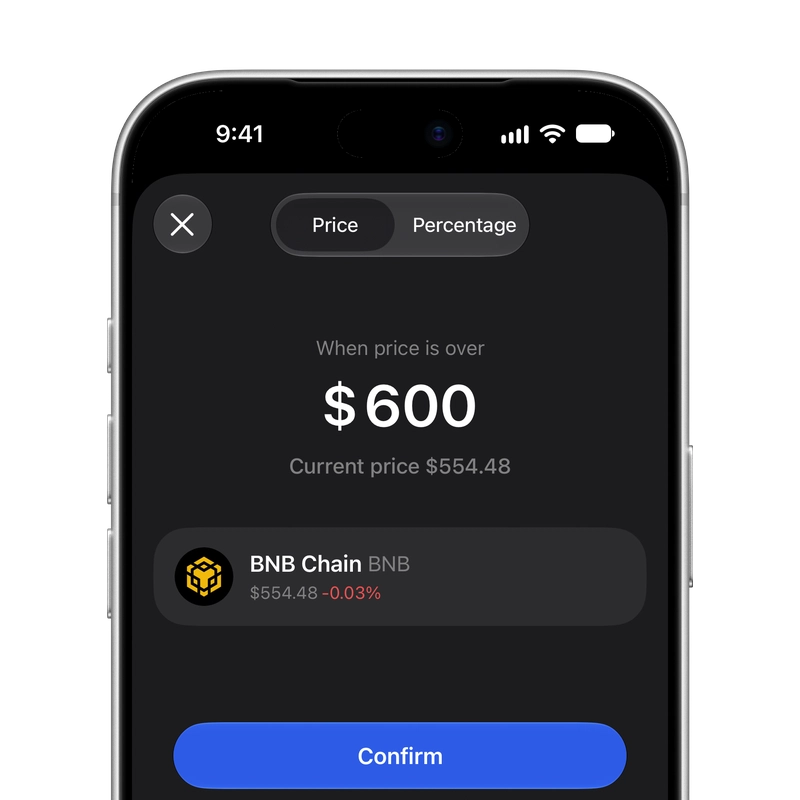



What Is a Cross-Chain ETH to BNB Swap?
An ETH to BNB swap trades ETH, the gas coin of Ethereum and of the layer 2 networks built on it, for BNB, the coin that pays every fee on BNB Chain. Both are EVM networks and share the 0x address format, yet each keeps its own ledger: ETH has no native place on BNB Chain, and BNB has none on Ethereum. So the swap is always cross-chain - you sign on the network that holds your ETH, and a provider pays BNB out on BNB Chain. People make it to get onto BNB Chain: to pay gas for BEP20 tokens and PancakeSwap trades, to stake BNB with a validator, or to hold part of a position in BNB. A search for “bridge ETH to BNB Chain” often has the same goal, but a bridge carries ETH across as a BEP20 token that cannot pay one BNB Chain fee, while this swap ends with BNB itself. The difference in detail: crypto bridge vs swap. For the way back, see BNB to ETH.
How Gem Wallet Finds the Best Rate
The network your ETH is on decides who can answer. ETH on Ethereum gets quotes from Relay, Mayan and THORChain; on Base and Arbitrum, from Relay and Mayan; on Robinhood Chain, from Relay. All of them deliver to the same place, BNB on BNB Chain, so the comparison comes down to how much BNB each one returns after its own costs. Gem Wallet ships a list of the contracts each provider may call and checks your transaction against it: a Relay quote that points anywhere but Relay’s deposit contract is dropped from the list before you see it, and a Mayan transaction that does not go into Mayan’s forwarder is refused at Confirm. Each cross-chain answer comes with its own deposit, so a quote stays valid for 5 minutes, and Confirm asks the same provider again if you take longer. Among 20+ swap providers, the quote with the most BNB comes first with its rate, estimated time and minimum BNB, and Gem Wallet’s fee is already inside that number. One of these routes up close: Mayan in Gem Wallet.
ETH to BNB Networks & Fees
Only the sending network charges you. BNB is always paid out on BNB Chain, to the same 0x address that holds your ETH:
| Network | Side of the swap | Network fee | Typical time |
|---|---|---|---|
| Ethereum | Sends ETH to the provider | About $0.50 at Normal gas, paid in ETH | 12-second blocks |
| Base | Sends ETH to the provider | Under $0.01, paid in ETH | 2-second blocks |
| Arbitrum | Sends ETH to the provider | About $0.02, paid in ETH | About 1 second per block |
| Robinhood Chain | Sends ETH to the provider | About $0.02, paid in ETH | About 1 second per block |
| BNB Chain | Receives native BNB | None - the payout is in the quote; a later BNB or BEP20 transfer costs under $0.01 | About 1 second per block once the payout is sent |
Network fees: Gem Wallet gas tracker, 2026-11-24 UTC; typical cross-chain times: completed Gem Wallet swaps, September-November 2026.
Live network fees for every chain: Gem Wallet gas tracker.
The Ethereum figure is the gas price of a contract call, so it follows how busy Ethereum is when you confirm, not how much ETH you send. On Base, Arbitrum and Robinhood Chain the same step costs a cent or two, because these layer 2 networks settle their transactions on Ethereum in batches. In every row the fee is paid in ETH from the balance you are swapping, so the swap needs no BNB to begin with: an empty BNB Chain balance is the usual starting point.
The swap as a whole takes longer than one block, usually up to about a minute, since the provider waits for your ETH transaction to confirm before it pays. Once the BNB is there, it covers gas for everything at that address on BNB Chain - including BEP20 tokens that may have been sent to it earlier and could not move without BNB. What you can do on the network next: what is BNB Chain, or put the BNB to work through BNB staking.