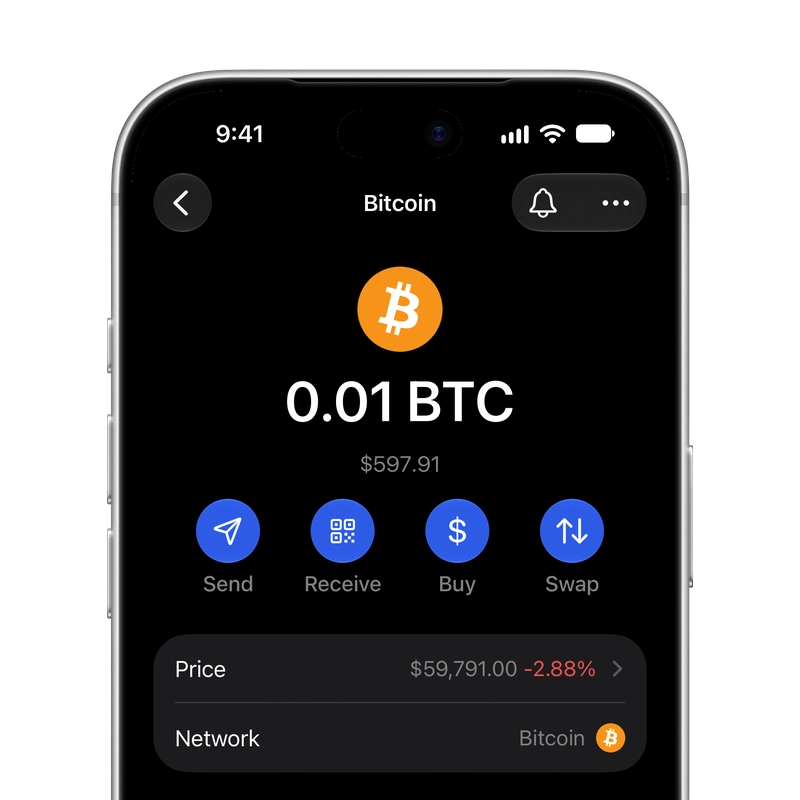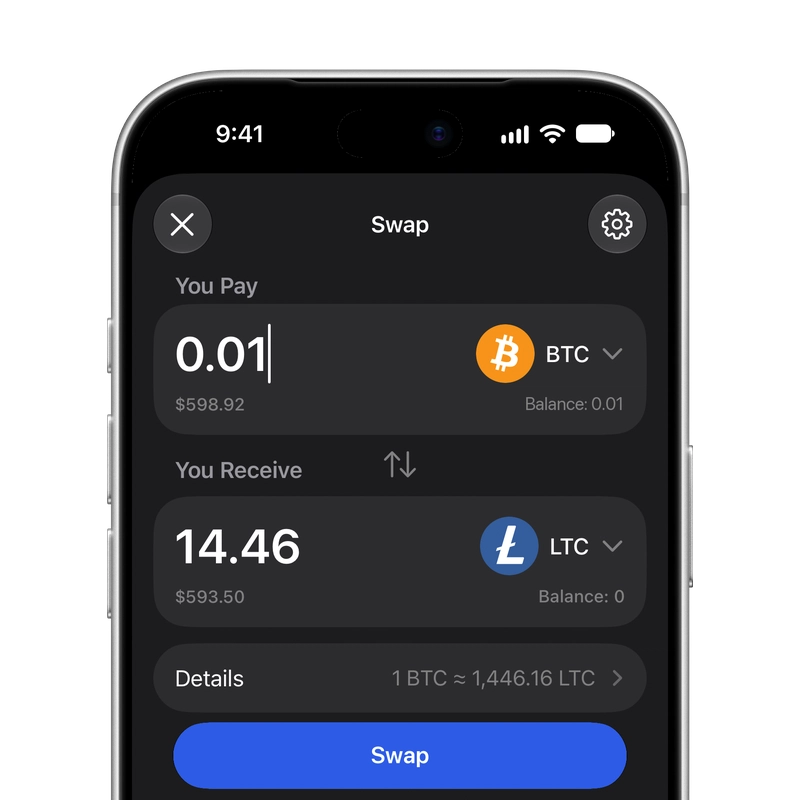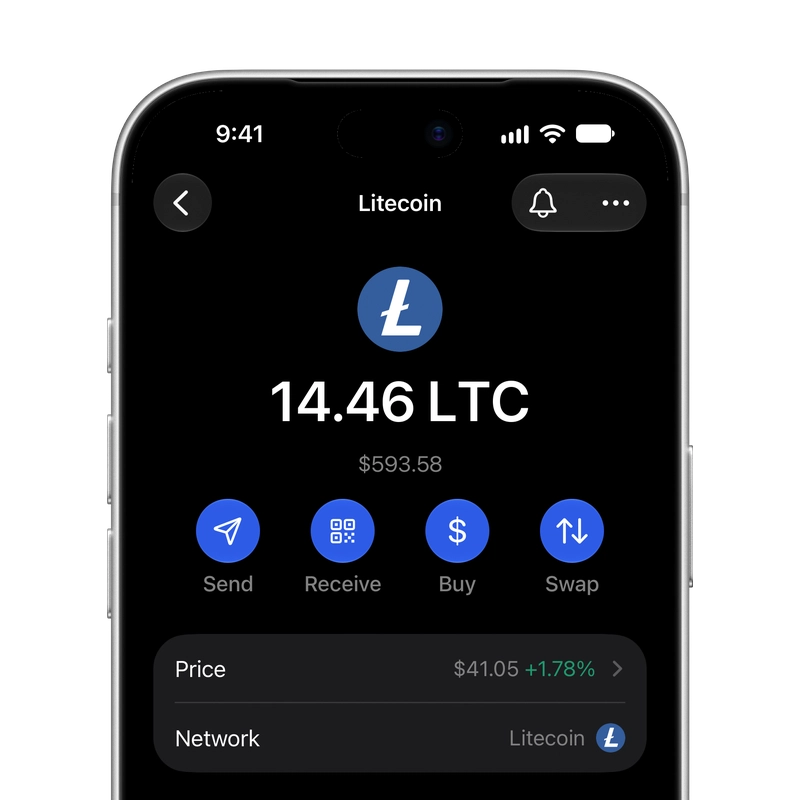



What Is a Cross-Chain BTC to LTC Swap?
A BTC to LTC swap pays with Bitcoin for LTC, the coin of Litecoin. Litecoin started in 2011 from Bitcoin’s code and kept its model of coins held as unspent outputs, but it mines with Scrypt, aims for a block every 2.5 minutes instead of 10 and caps the supply at 84 million. The two ledgers still know nothing of each other, so the swap is always cross-chain: a provider takes your BTC on Bitcoin and pays LTC on Litecoin out of its own liquidity. People make it to buy Litecoin without an exchange, or to keep a spending balance next to their Bitcoin: LTC moves for a fraction of a cent and confirms four times as often. Both coins sit in one Gem Wallet, at a bc1 and an ltc1 address made from the same phrase. More about the network: what Litecoin is.
How Gem Wallet Finds the Best Rate
Neither chain runs contracts, so there is no router to call: your BTC goes in a plain Bitcoin transaction to the deposit target that comes with the quote. For THORChain that target is the Bitcoin vault it is using at that moment, and the vaults rotate, which is why every quote brings a fresh one. THORChain keeps BTC and LTC pools on their own chains and trades one against the other directly, with no wrapped coin in between; Gem Wallet ranks it first whenever it comes within 0.1% of the top quote, because nothing stands between the wallet and the trade. Other cross-chain providers are asked in the same round. Out of 20+ swap providers, the one picked shows its rate, the estimated time and the minimum LTC, with Gem Wallet’s fee already inside the number. How the vaults work: THORChain in Gem Wallet.
BTC to LTC Networks & Fees
Both ends are fixed: BTC leaves from Bitcoin and LTC arrives on Litecoin. The only network fee you pay is the Bitcoin one, and both chains price a transaction the same way, by its size in virtual bytes times a rate:
| Network | Its part in the swap | Normal fee rate | Network fee | Paid in | Typical time |
|---|---|---|---|---|---|
| Bitcoin | You send BTC to the provider’s deposit target | 2 sat/vB | About $0.17 at Normal, about $0.26 at Fast | BTC | About 10 minutes per block, plus the confirmations the provider waits for |
| Litecoin | The provider pays native LTC to your ltc1 address | 10 litoshi/vB | Nothing for you to pay - it is in the quote; a later LTC send costs under $0.01 | LTC | One block, with a 2.5-minute target |
From your Bitcoin transaction to LTC at your ltc1 address, a BTC to LTC swap usually takes about 15-20 minutes, most of it waiting for the Bitcoin block.
Network fees: Gem Wallet gas tracker, 2026-11-24 UTC; typical cross-chain times: completed Gem Wallet swaps, September-November 2026.
Live network fees for every chain: Gem Wallet gas tracker.
The same one-input transfer of about 141 vB cost about $0.17 on Bitcoin and $0.0006 on Litecoin on that day, so the Bitcoin leg is where the fee of this swap sits, and the LTC you get is cheap to move from then on. Since the fee follows size and not amount, a wallet built from many small Bitcoin deposits pays more for the same swap than one with a single output. When you are not in a hurry, a lower rate keeps the fee down, and the swap starts once the transaction confirms; Gem Wallet lets you set the rate in sat/vB yourself, as described in custom Bitcoin fees.
The Litecoin address needs no preparation: it exists from the moment you create the wallet and receives with a zero balance. To turn the LTC back into Bitcoin later, LTC to BTC is the same route in reverse.