


What Is a Cross-Chain BNB to TRX Swap?
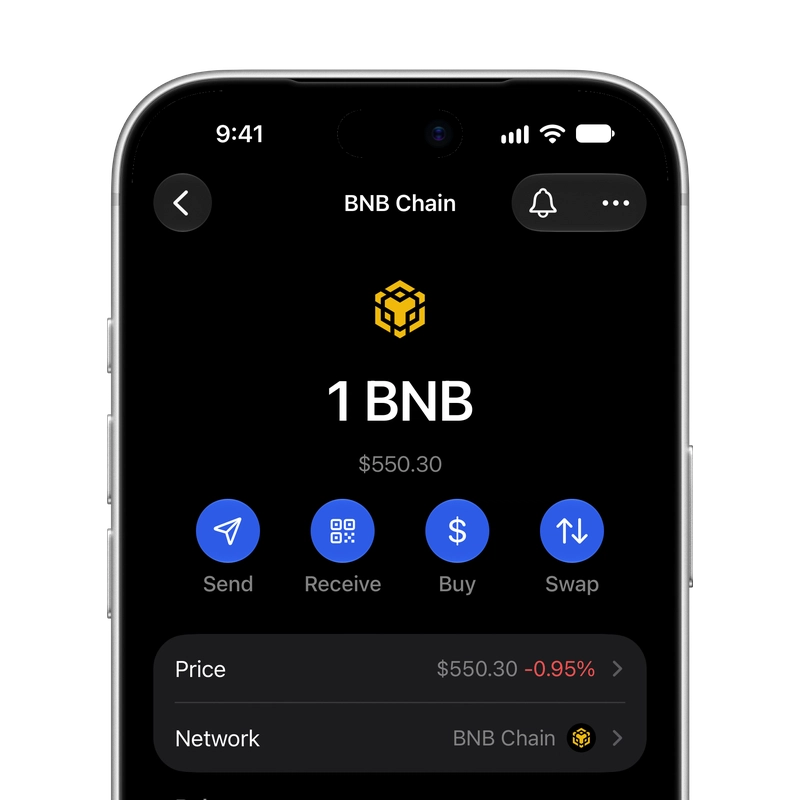
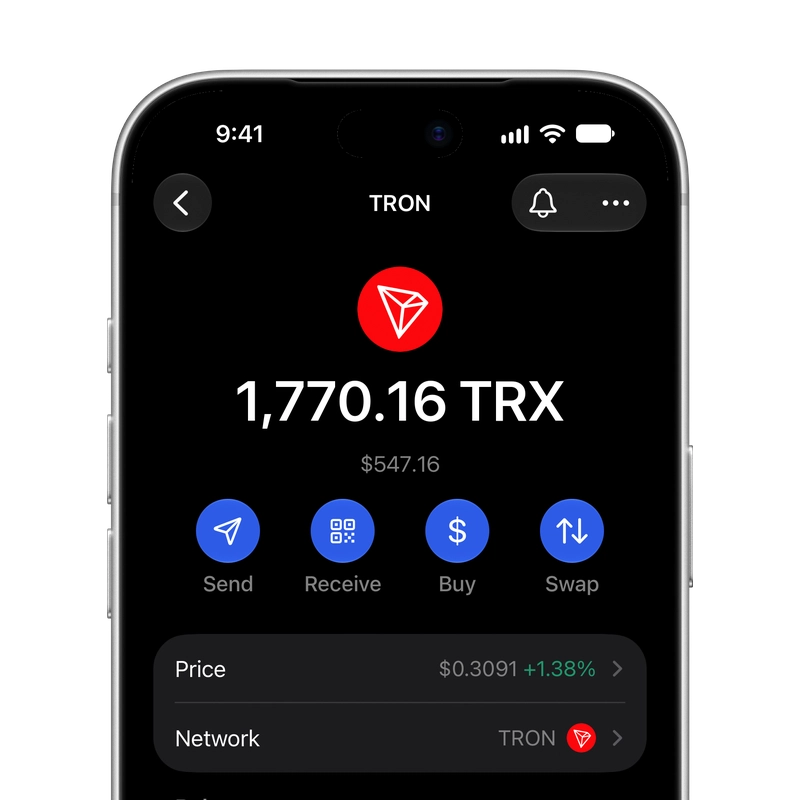
A BNB to TRX swap spends BNB, the gas coin of BNB Chain, and gives you TRX, the native coin of TRON. The two networks charge for transactions in different ways. BNB Chain is an EVM network: you pay gas in BNB, priced in gwei, from a 0x address. TRON meters every transaction in bandwidth and energy, which you either burn TRX for or get by freezing TRX, at an address that starts with T. Neither network can carry the other’s coin natively, so the swap is cross-chain: you sign on BNB Chain, and a provider pays TRX on TRON. The usual reason is a TRON address that needs fuel - USDT received on TRC20 that cannot move without TRX, or TRX to freeze for energy and rewards. Gem Wallet holds both addresses under one recovery phrase, so there is nothing to set up before the payout. The opposite route is TRX to BNB.
How Gem Wallet Finds the Best Rate
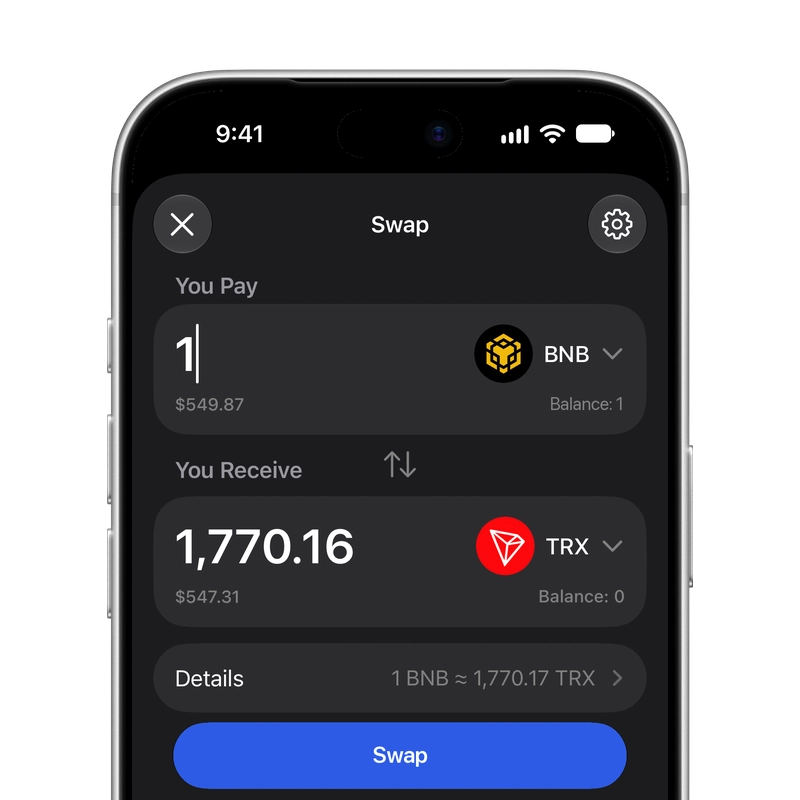
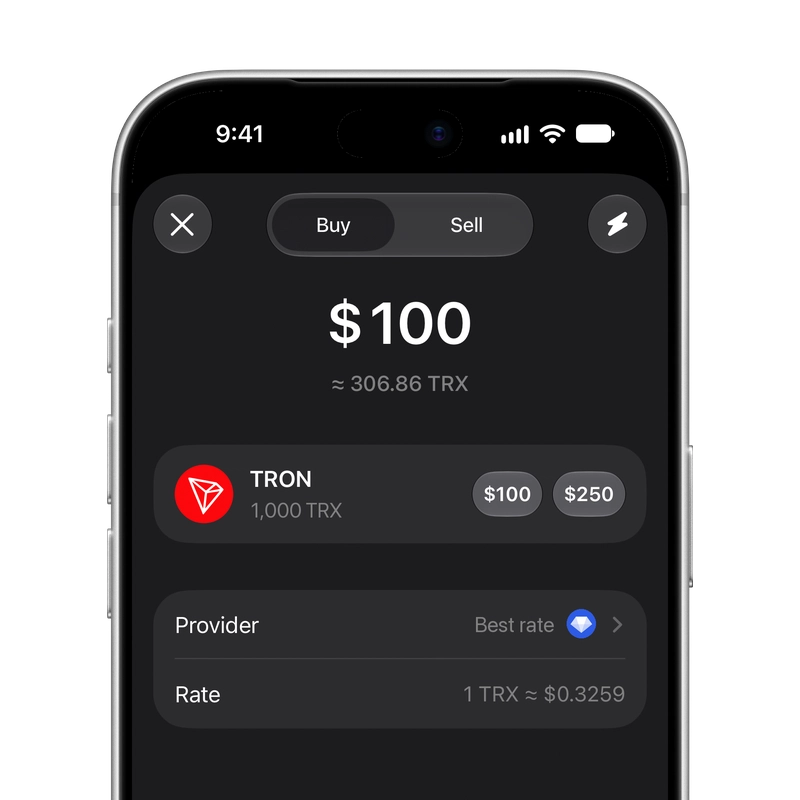
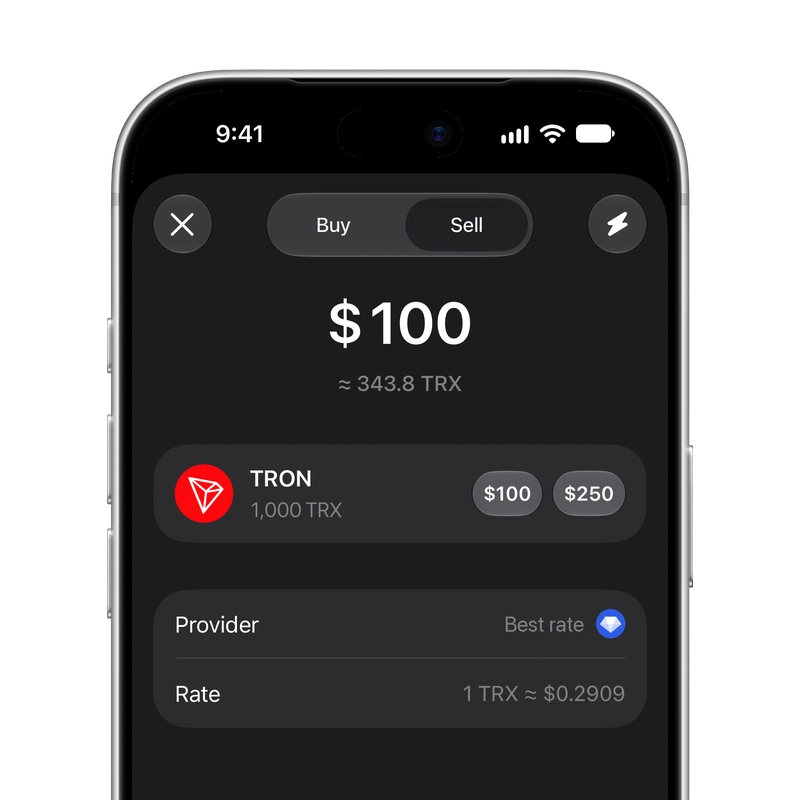
Your BNB leaves from an EVM network, and that decides what Gem Wallet checks. A Relay quote must send the BNB into Relay’s own deposit contract on BNB Chain; the app compares the contract with the address it ships for Relay when the quote arrives and once more at Confirm, and drops a quote that names anything else. THORChain receives the BNB at the vault it is using at that moment, and since vaults rotate, every quote carries its own. THORChain trades on its own chain, so it leads whenever it comes within 0.1% of the top TRX amount. Because each cross-chain answer comes with a fresh deposit, a quote lives for 5 minutes; while the Swap screen stays open, Gem Wallet asks again every 30 seconds. Out of 20+ swap providers, the winner shows its rate, estimated time and minimum TRX, and Gem Wallet’s fee is already inside that number. How the protocol behind most of these quotes works: THORChain in Gem Wallet.
BNB to TRX Networks & Fees
The route has two fixed ends, so there is no network to choose. Only the BNB Chain side costs you a fee:
| Network | What happens there | Network fee you pay | Typical time |
|---|---|---|---|
| BNB Chain | Your BNB goes to the provider | About $0.01 at Normal, about $0.03 at Fast, paid in BNB | About 1 second per block |
| TRON | The provider pays native TRX to your T address | None - the payout cost is in the quote | About 3 seconds per block once the payout is sent |
Network fees: Gem Wallet gas tracker, 2026-11-24 UTC; typical cross-chain times: completed Gem Wallet swaps, September-November 2026.
Live network fees for every chain: Gem Wallet gas tracker.
The BNB Chain fee comes from the gas of one call to the provider, so it does not grow with the amount: a $5 top-up and a $5,000 swap pay the same cent. It is taken in BNB from the balance you are swapping, and your TRON address can be empty when you start.
Once the TRX lands, every TRON action is charged against it, and a token transfer costs far more than a plain send, because it also needs energy. If you freeze part of it on the Stake screen, Gem Wallet shows your Energy and Bandwidth there as available out of total, and each transfer draws on them before any TRX is burned. The whole swap takes longer than one block, usually up to about a minute, because the TRX is paid only after the provider sees your BNB Chain transaction. More on the network itself: what is the TRON blockchain.