


Table of Contents
नवंबर 2025 से जनवरी 2026 के बीच address poisoning हमले 5.5 गुना बढ़ गए - और सिर्फ एक गलत कॉपी किए गए address की वजह से लोगों ने लाखों गंवा दिए। अपने सुरक्षा तंत्र की बदौलत Gem Wallet poisoning वाले लेनदेन को आपके इतिहास से पहले ही हटा देता है, आपको उनके दिखने से पहले।
मुख्य बातें
- नुकसान सैकड़ों मिलियन तक पहुंच चुका है - 2024 में एक हमले से $68M का नुकसान हुआ, और दिसंबर 2025 में दूसरे हमले में $50M के USDT उड़ा लिए गए (CoinDesk)।
- Gem Wallet वॉलेट के स्तर पर ही address poisoning से आपकी संपत्तियों की रक्षा करता है - उन्नत फ़िल्टरिंग उपयोगकर्ताओं की सुरक्षा को ध्यान में रखते हुए poisoning वाले लेनदेन को अपने-आप हटा देती है।
Gem Wallet ने 2024 में address poisoning को कैसे पहचाना
Gem Wallet ने address poisoning के खिलाफ अपना सुरक्षा तंत्र 2024 की शुरुआत में बनाना शुरू किया - उस समय से काफी पहले, जब यह हमला आम खतरा बना।
TRC20 पर USDT उपयोगकर्ताओं की संख्या बढ़ने के साथ वॉलेट spam लेनदेन से भरने लगे: इंटरफ़ेस में भीड़ बढ़ गई, और यही छोटे-छोटे ट्रांसफर चोरी का चारा बनने लगे। पैसे चोरी होने के मामले बढ़ रहे थे।
टीम ने एक साथ दो समस्याएं देखीं - इंटरफ़ेस अपनी उपयोगिता और स्पष्टता खो रहा था, और साथ ही हमले का एक असली ज़रिया उपयोगकर्ताओं को निशाना बना रहा था। दूसरे वॉलेट इस समस्या को नज़रअंदाज़ करते रहे और ऐसे लेनदेन को फ़िल्टर करना सालों बाद शुरू किया, जबकि Gem Wallet ऐसा करने वाले पहले वॉलेट्स में से था - क्योंकि वह उन खतरों पर लगातार नज़र रखता है, जो उसके उपयोगकर्ताओं को नुकसान पहुंचा सकते हैं।
Address poisoning क्या है
Address poisoning एक धोखाधड़ी है, जिसमें हमलावर आपके लेनदेन इतिहास में मिलता-जुलता address डाल देता है, इस उम्मीद में कि आप गलती से उसे कॉपी कर लेंगे। इसके लिए न आपकी private key चाहिए, न कोई हैकिंग - बस इतिहास से address कॉपी करने की आपकी आदत काफी है। हमलावर ऐसा address बनाता है, जिसके पहले और आखिरी अक्षर आपके पहले से इस्तेमाल हो रहे address से मेल खाते हैं; फर्क सिर्फ बीच के हिस्से में होता है, और बीच का हिस्सा लगभग कोई नहीं जांचता। खतरा यह है कि यह हमला हमले जैसा दिखता ही नहीं: न कोई pop-up, न signature का अनुरोध - बस इतिहास में एक और पंक्ति, जो जानी-पहचानी लगती है।
Address poisoning हमला कैसे काम करता है
हमला तीन चरणों में होता है:
- तैयारी: हमलावर सार्वजनिक blockchain पर आपकी गतिविधि पर नज़र रखता है और मिलता-जुलता address बनाता है।
- Poisoning: वह आपको एक छोटा-सा ट्रांसफर भेजता है - कभी-कभी नकली टोकन का शून्य मूल्य वाला ट्रांसफर - ताकि वह आपके इतिहास में असली लेनदेन के बगल में जगह बना ले।
- जाल: अगली बार जब आप इतिहास से “जाना-पहचाना” address कॉपी करते हैं, तो आपका पैसा हमलावर के पास चला जाता है।
सुनने में यह बहुत मामूली तरकीब लगती है - लेकिन यह बिना चूके काम करती है, और वह भी बड़ी रकम के लिए। और खतरा थमा नहीं है: नवंबर 2025 से जनवरी 2026 तक सिर्फ दो महीनों में poisoning की कोशिशें 5.5 गुना बढ़ गईं, और अब नेटवर्क में रोज़ औसतन 160,000 से ज़्यादा ऐसी कोशिशें दर्ज होती हैं। सिर्फ Ethereum पर ही इस छोटी-सी अवधि में उपयोगकर्ताओं ने लगभग $62M गंवा दिए।
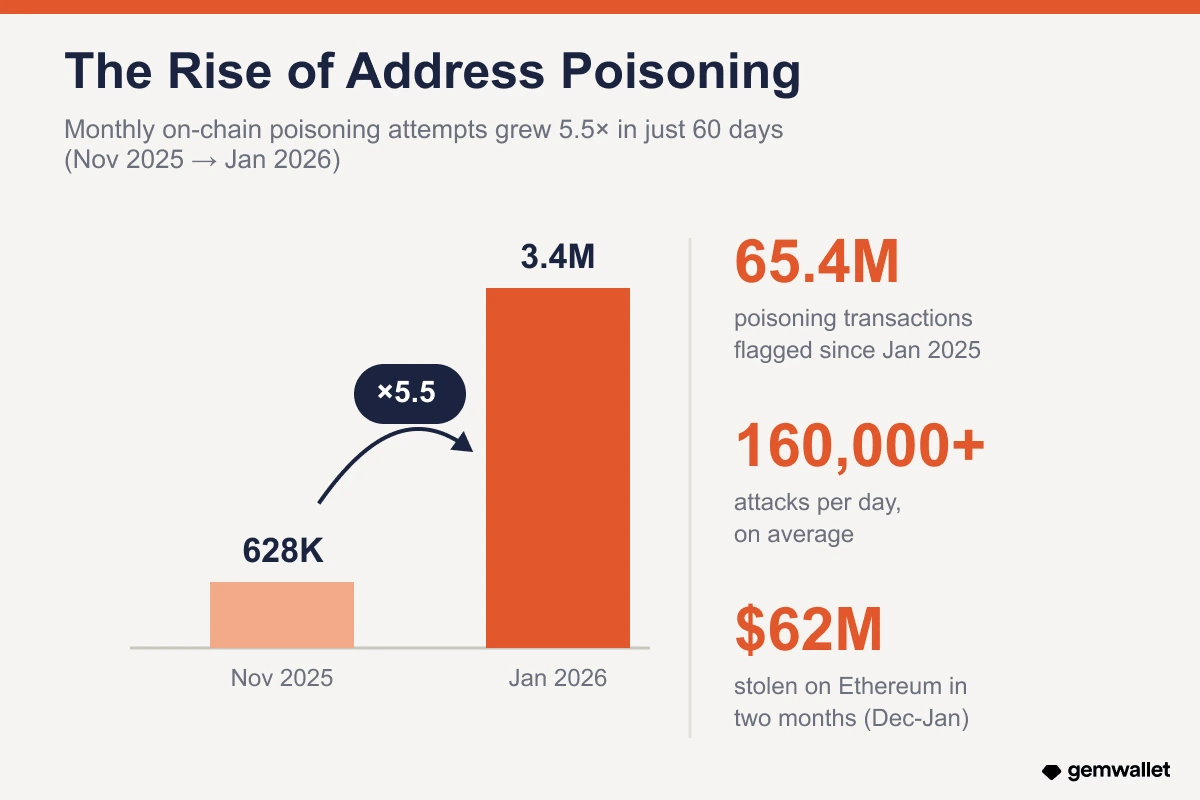 दो महीनों में address poisoning की कोशिशें 5.5 गुना बढ़ गईं। स्रोत: Blockaid, ScamSniffer।
Address poisoning से हुई सबसे बड़ी चोरियां
Address poisoning उपयोगकर्ताओं को पहले ही सैकड़ों मिलियन डॉलर का नुकसान पहुंचा चुका है - Carnegie Mellon के एक अध्ययन में 17 मिलियन संभावित पीड़ितों को निशाना बनाने वाली 270 मिलियन poisoning कोशिशें गिनी गईं। CoinDesk के अनुसार, दो सबसे चर्चित मामले दिखाते हैं कि address की एक गलती कैसे आपदा बन जाती है:
- $68M (WBTC), मई 2024: एक उपयोगकर्ता ने “0xd9A1…” अक्षरों वाले मिलते-जुलते address पर 1,155 WBTC भेज दिए। इसके बाद on-chain बातचीत हुई, और कुछ दिनों बाद हमलावर ने पैसे लौटा दिए - यह एक दुर्लभ अपवाद है, नियम नहीं।
- $50M (USDT), दिसंबर 2025: पीड़ित ने एक टेस्ट लेनदेन के सिर्फ 26 मिनट बाद poisoning वाला address कॉपी किया और लगभग 50M USDT हमलावर को भेज दिए; ये पैसे Tornado Cash के ज़रिए लॉन्डर किए गए।
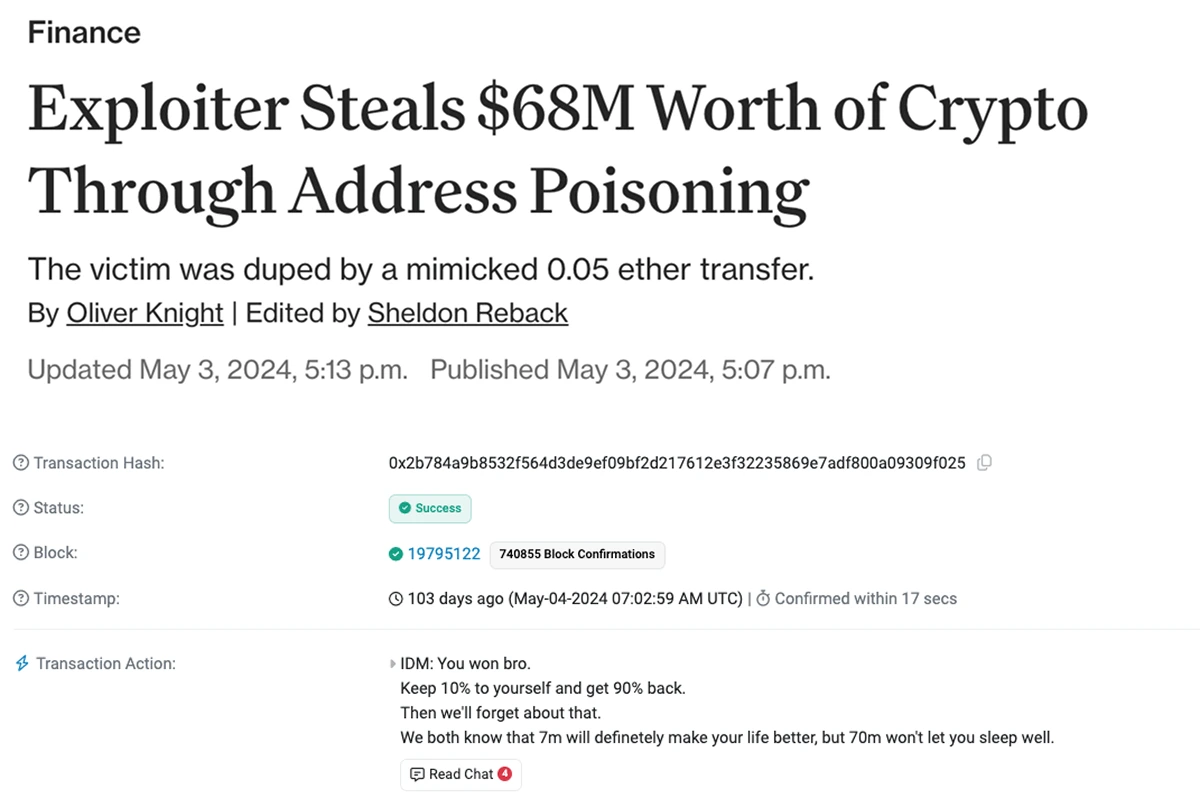 $68M वाले address poisoning मामले का on-chain संदेश: “10% रख लो, 90% लौटा दो।” स्रोत: Etherscan।
Gem Wallet address poisoning से संपत्तियों की रक्षा कैसे करता है
Gem Wallet अपने सुरक्षा तंत्र से address poisoning से आपकी संपत्तियों की रक्षा करता है, जो वॉलेट में बिल्ट-इन है और अपने-आप काम करता है - कुछ भी चालू करने की ज़रूरत नहीं। फ़िल्टरिंग उन सभी 100+ blockchain पर काम करती है, जिन्हें Gem Wallet सपोर्ट करता है, जिनमें Bitcoin, Solana, BNB Chain और कई अन्य शामिल हैं। हम सटीक एल्गोरिदम का खुलासा नहीं करते, ताकि हमलावर उसका तोड़ न निकाल सकें। मोटे तौर पर यह सुरक्षा तीन परतों में काम करती है:
बेमतलब के छोटे लेनदेन छिपाना
अगर आने वाली राशि इतनी छोटी है कि उसका कोई असली मतलब न हो - जैसे 0.000001 USDT, TRX में एक सेंट का अंश, या नकली टोकन का शून्य मूल्य वाला ट्रांसफर - तो Gem Wallet उसे वॉलेट इंटरफ़ेस में नहीं दिखाता। ऐसे dust ट्रांसफर सिर्फ इसलिए भेजे जाते हैं कि आपका इतिहास भर जाए और आपके सामने मिलता-जुलता address आ जाए। स्क्रीन पर लेनदेन नहीं, तो चारा भी नहीं - और आपका इतिहास साफ और काम का बना रहता है।
मिलते-जुलते address को फ्लैग करना
Gem Wallet हर आने वाले address की तुलना उन address से करता है, जिनका आपने हाल ही में इस्तेमाल किया है। मान लीजिए, आप ETH ऐसे address पर भेजते हैं, जो 0x7a3F से शुरू होता है और b21C पर खत्म होता है। एक मिनट बाद आपके इतिहास में ऐसे address से ट्रांसफर आता है, जिसमें वही 0x7a3F और b21C हैं, लेकिन बीच का हिस्सा अलग है - Gem Wallet यह “रिश्तेदारी” पहचान लेता है और नकली address को फ़िल्टर कर देता है। पूरा हमला address के बीच दिखने वाली समानता पर टिका है - और Gem Wallet ठीक इसी को पकड़ता है और अपने उपयोगकर्ताओं को हमशक्ल address से बचाता है।
Contacts: भरोसेमंद सूची से भेजें
Gem Wallet Contacts के साथ आपको इतिहास से address कॉपी करने की ज़रूरत ही नहीं पड़ती - और address poisoning के लिए कोई रास्ता नहीं बचता। Contacts में आप अक्सर इस्तेमाल होने वाले address सेव कर सकते हैं, हर एक को साफ-सा नाम दे सकते हैं - जैसे “Josh”, “Alice” या “Savings” - और भेजते समय एक ही टैप में सही address चुन सकते हैं। एक contact में अलग-अलग नेटवर्क के कई address रखे जा सकते हैं। Gem Wallet सेल्फ-कस्टडी आर्किटेक्चर पर बना है, इसलिए सभी contacts आपके डिवाइस पर ही लोकल रूप से स्टोर होते हैं, सर्वर के साथ कोई sync नहीं होता। भरोसेमंद contacts सूची के साथ गलत address पर पैसे भेजने की संभावना लगभग शून्य हो जाती है।
Gem Wallet के साथ आप निश्चिंत रह सकते हैं: टीम लगातार नए खतरों और धोखाधड़ी के तरीकों पर नज़र रखती है और ज़्यादातर दूसरों की तुलना में तेज़ी से सुरक्षा लागू करती है - ताकि आपकी संपत्तियां हर समय सुरक्षित रहें। आज ही Gem Wallet डाउनलोड करें और भरोसे के साथ अपनी क्रिप्टो संभालें।
अस्वीकरण: यह लेख केवल जानकारी और शिक्षा के उद्देश्य से है, यह वित्तीय या निवेश सलाह नहीं है। क्रिप्टो एसेट्स बहुत अस्थिर होते हैं और आप निवेश की गई पूरी राशि खो सकते हैं। खुद रिसर्च करें और अपने जोखिम पर फ़ैसले लें।