


What Are Stablecoins?
Stablecoins are a type of cryptocurrency that aim to maintain a stable value by being pegged, or tied, to another asset, such as a fiat currency (e.g., US dollar), a commodity (e.g., gold), or another cryptocurrency (e.g., Bitcoin). Stablecoins try to offer the benefits of both cryptocurrencies and traditional currencies, such as fast transactions, low fees, transparency, security, and price stability.
Key Takeaways
Stablecoins are cryptocurrencies that attempt to peg their market value to some external reference.
Stablecoins are more useful than more-volatile cryptocurrencies as a medium of exchange.
Stablecoins may be pegged to a currency like the U.S. dollar or to the price of a commodity such as gold.
Stablecoins pursue price stability by maintaining reserve assets as collateral or through algorithmic formulas that are supposed to control supply.
Stablecoins continue to come under scrutiny by regulators, given the rapid growth of the $128 billion market and its potential to affect the broader financial system.
Stablecoins can be used on many popular blockchains, but most activity these days happens on Ethereum or the Tron Blockchain.
Are Stablecoins Safe?
Stablecoins generally possess the same robust security features as other cryptocurrencies, utilizing blockchain technology for secure transactions and maintaining data integrity. However, they are uniquely challenged in sustaining their value, which is pegged to a base asset like fiat currency. Often, stablecoins aren't completely decentralized but instead are managed by a centralized entity, making them a bridge between fully regulated fiat currencies and the decentralized cryptocurrency market. This centralization introduces risks and dependencies not common in decentralized cryptocurrencies. Therefore, regardless of the security of your stablecoin wallet, risks inherent in the centralized nature of stablecoins still persist.
Why Are Stablecoins Important?
Stablecoins are important because they can enable more widespread adoption of cryptocurrencies and decentralized finance (DeFi) applications (DApps) that run on blockchain networks. By reducing the volatility and risk associated with holding and using cryptocurrencies, stablecoins can make them more accessible and attractive to a wider range of users, including individuals, businesses, and institutions.
Some of the use cases for stablecoins include:
Remittances: Sending money across borders can be expensive and slow with traditional payment systems. Stablecoins can offer a cheaper and faster alternative that preserves the value of the transferred funds.
Trading: Cryptocurrency traders can use stablecoins as a safe haven to store their profits or hedge against market fluctuations without having to convert their crypto assets into fiat currencies and incur fees or delays.
Lending: Borrowers and lenders can use stablecoins to access decentralized lending platforms (DeFi) that offer attractive interest rates and flexible terms without intermediaries or credit checks.
Payments: Both merchants and consumers can utilize stablecoins for purchasing goods and services, both online and offline, without the concerns of price volatility or currency conversion expenses. Transactions can be made directly from your stablecoin wallet in mere seconds, and they come with exceptionally low fees.
What Are the Different Types of Stablecoins?
There are three main types of stablecoins, based on the mechanism used to stabilize their value:
Fiat-backed: Backed by a reserve of fiat currency (such as the US dollar) that is held by a third-party custodian (such as a bank). The issuer of the stablecoin promises to redeem each stablecoin for its equivalent value in fiat currency upon request. The value of these stablecoins is supposed to track the value of the pegged currency, but it depends on the trust in the custodian and the issuer. Examples of fiat-backed stablecoins include Tether (USDT), USD Coin (USDC), and TrueUSD (TUSD).
Commodity-backed: Backed by a reserve of physical commodities (such as gold or silver) that are stored in secure vaults. The issuer of the stablecoin promises to redeem each stablecoin for its equivalent value in the commodity upon request. The value of these stablecoins is supposed to track the value of the pegged commodity, but it depends on the trust in the custodian and the issuer, as well as the market demand and supply for the commodity. Examples of commodity-backed stablecoins include Paxos Gold (PAXG) and Tether Gold (XAUT).
Crypto-backed: Backed by a reserve of other cryptocurrencies (such as Bitcoin or Ether) that are locked in smart contracts on a blockchain network. The issuer of the stablecoin uses overcollateralization (i.e., providing more crypto assets than the value of the issued stablecoins) and liquidation mechanisms (i.e., selling some of the crypto assets to maintain the peg) to ensure that each stablecoin is always fully backed by crypto assets. The value of these stablecoins is supposed to track the value of the pegged currency or commodity, but it depends on the trust in the smart contract code and the stability of the underlying crypto assets. Examples of crypto-backed stablecoins include Dai (DAI), sUSD (SUSD), and BitUSD (BITUSD).
What Can You Do With Stablecoins?
Stablecoins can be used for various purposes, such as:
Buying and selling other cryptocurrencies on exchanges or peer-to-peer platforms.
Storing your wealth in a digital form that is resistant to inflation, censorship, and seizure.
Sending and receiving money across borders with low fees and fast settlement times.
Accessing decentralized financial services (DeFi) that offer lending, borrowing, trading, investing, saving, and more.
Paying for goods and services online or offline with merchants that accept stablecoins as a payment option.
What Are Some Popular Stablecoins?
Among the leading options accessible through a stablecoin wallet, some of the most popular and widely used stablecoins include:
Tether (USDT): The oldest and largest stablecoin by market capitalization, Tether claims to be backed by US dollars at a 1:1 ratio, but it has faced controversy and scrutiny over its reserves and transparency. Tether is available on several blockchain networks, including Ton, Ethereum, Tron, and Binance Smart Chain.
USD Coin (USDC): A regulated and audited stablecoin that is backed by US dollars at a 1:1 ratio, USD Coin is issued by a consortium of companies led by Circle and Coinbase. USD Coin is available on several blockchain networks, including Ethereum, Algorand, Stellar, and Solana.
Dai (DAI): A decentralized and algorithmic stablecoin that is backed by a basket of crypto assets (such as Ether and USDC) that are locked in smart contracts on the Ethereum network. Dai maintains its peg to the US dollar through a system of incentives and penalties that adjust the supply and demand of Dai and its collateral.
Paypal Stablecoin (PYUSD): A stablecoin issued by PayPal, maintains a stable $1 USD value and is supported by dollar deposits and US treasuries. It enables easy buying, selling, and transferring within the PayPal app, and can be sent to friends in the US or to Ethereum wallets that accept PYUSD, with network fees applicable.
Where Can I Buy Stablecoins?
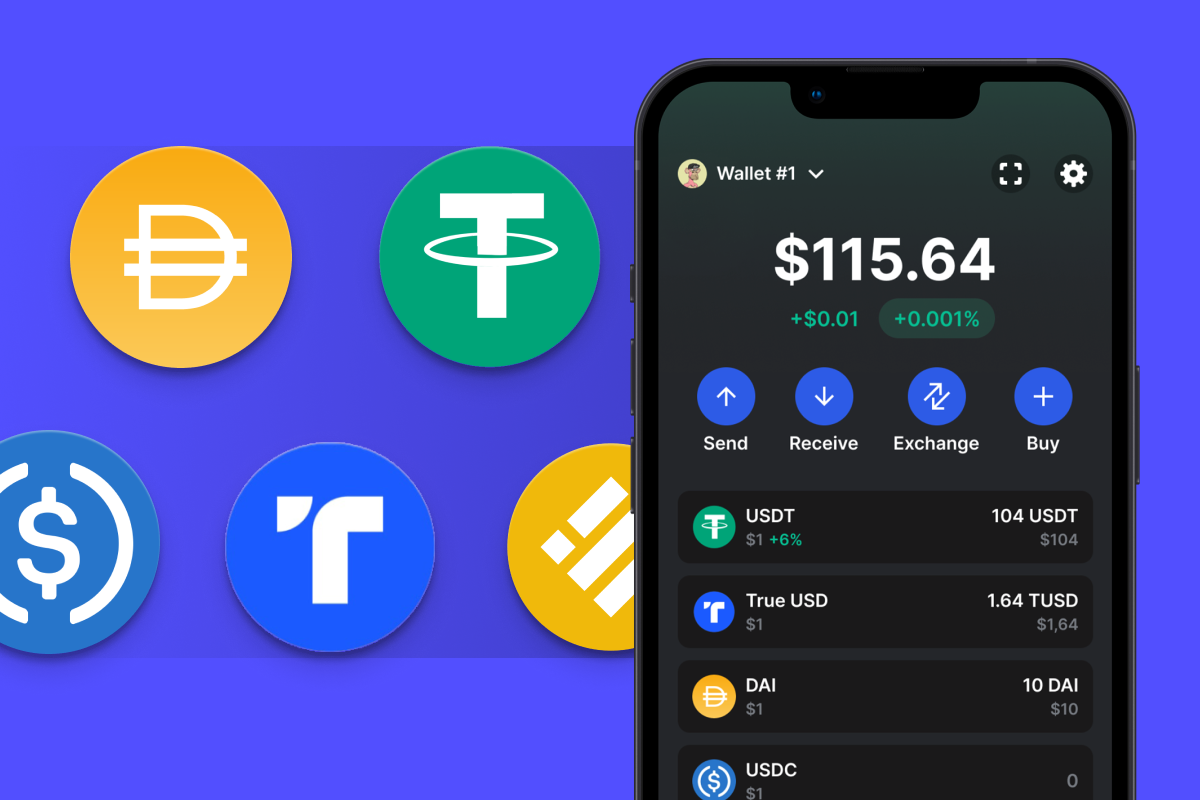
You can purchase stablecoins just like any other cryptocurrency directly through the app. Simply choose the desired asset, click on the purchase icon, and follow the on-screen instructions. Your assets will be transferred to your stablecoin wallet almost instantly after the purchase.
It's important to note that stablecoins are issued on different blockchains, such as ERC20 (Ethereum blockchain) or TRX20 (Tron blockchain). Therefore, if you want to use your stablecoin balance after purchasing, make sure you have enough of the base tokens of the network your stablecoin is on to cover the network fees.
For instance, if you have USDT TRC20, you need to have some Tron in your wallet to pay for the network services. You can transfer Tron from an exchange to your wallet, or buy Tron directly through the app.